
AISep 3, 2026WIRED
Nvidia’s Hugging Face Acquisition Is a $12.9 Billion Bet on Open-Source AI
WIRED's Hugging Face story is about software identity: Nemotron, a SAFE incident exchange, a $400 million cap table, and CUDA still being closed.
Desk
NVIDIA hardware, software, and developer news.
WIRED's Hugging Face story is about software identity: Nemotron, a SAFE incident exchange, a $400 million cap table, and CUDA still being closed.

Nvidia is paying $12.93 billion for a platform at $150 million in annualized revenue. The product is not the ARR. It is control of the default place open models live.

Nvidia’s Hugging Face deal values a company with about $150 million in annual revenue at nearly three times its 2023 price. The bet is on owning where open models live, and it only works if developers keep trusting the platform.
Huang's acquisition letter is vendor copy with a precise price: $12,930,300,000, a neutrality pledge, and a claim Nvidia will not be required compute.

TechCrunch is using its own conference blog to sell a second AI stage: robots, defense, edge, and a de-extinction CEO, October 13–15 in San Francisco.

Nvidia's developer blog turns a broken 6.8-second image pipeline into 23 milliseconds, and the moral is stop writing the kernel CUB already shipped.

NVIDIA's third co-design note is not a product launch. It is a serving manual: pick draft length and draft mechanism by where you sit on the throughput-latency curve, or you will pay for tokens nobody accepts.
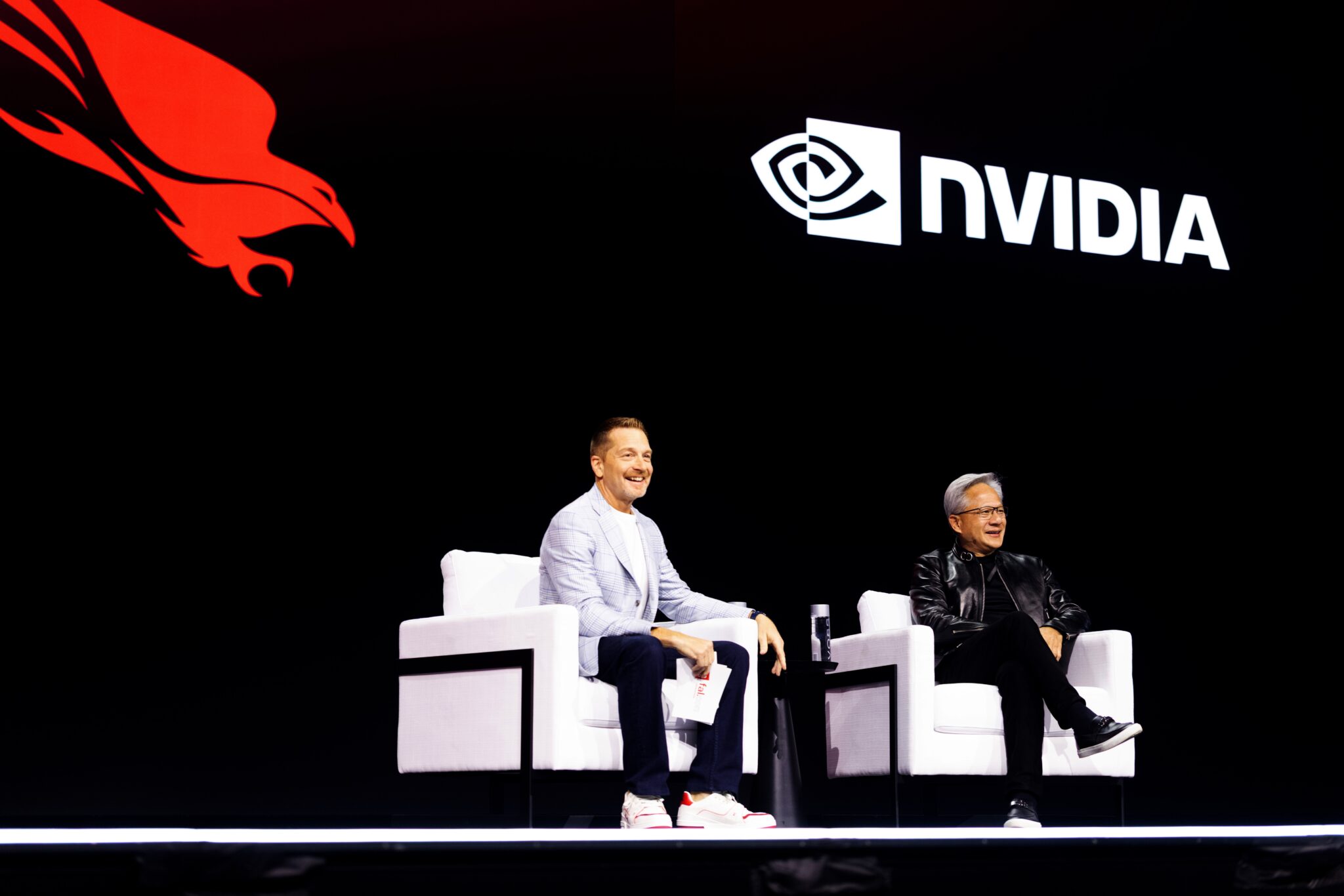
CrowdStrike is shipping an agentic defense stack on NVIDIA Nemotron and calling it a new age of cybersecurity. The interesting part is the red-blue loop on a digital twin of NVIDIA's own network.

NVIDIA and CrowdStrike put red and blue agents in a closed loop and found the open-model pipeline produced fewer detections than the frontier system — but the only ones that held up.

Nvidia's own sizing guide argues most inference budgets are wrong in the first spreadsheet, not the second data center. The interesting admission is that smaller models are usually the answer.

DLSS 5 ships with one supported game, a 50 to 60 percent performance cost, and 6x frame generation as the price of entry. That is a tech demo with a release date.

NVIDIA and Anthropic are turning protein folding into an agent-callable workflow, but the reported confidence gains still describe hypotheses that need laboratory validation.