AI · Nov 9, 2026
OpenAI’s Control Room puts a fail-closed kill switch inside the inference engineOpenAI says its models now shave area off production chips, including AMD’s next flagships
· Updated · Signal Desk newsroom
Analysis of reporting by OpenAI. How we work
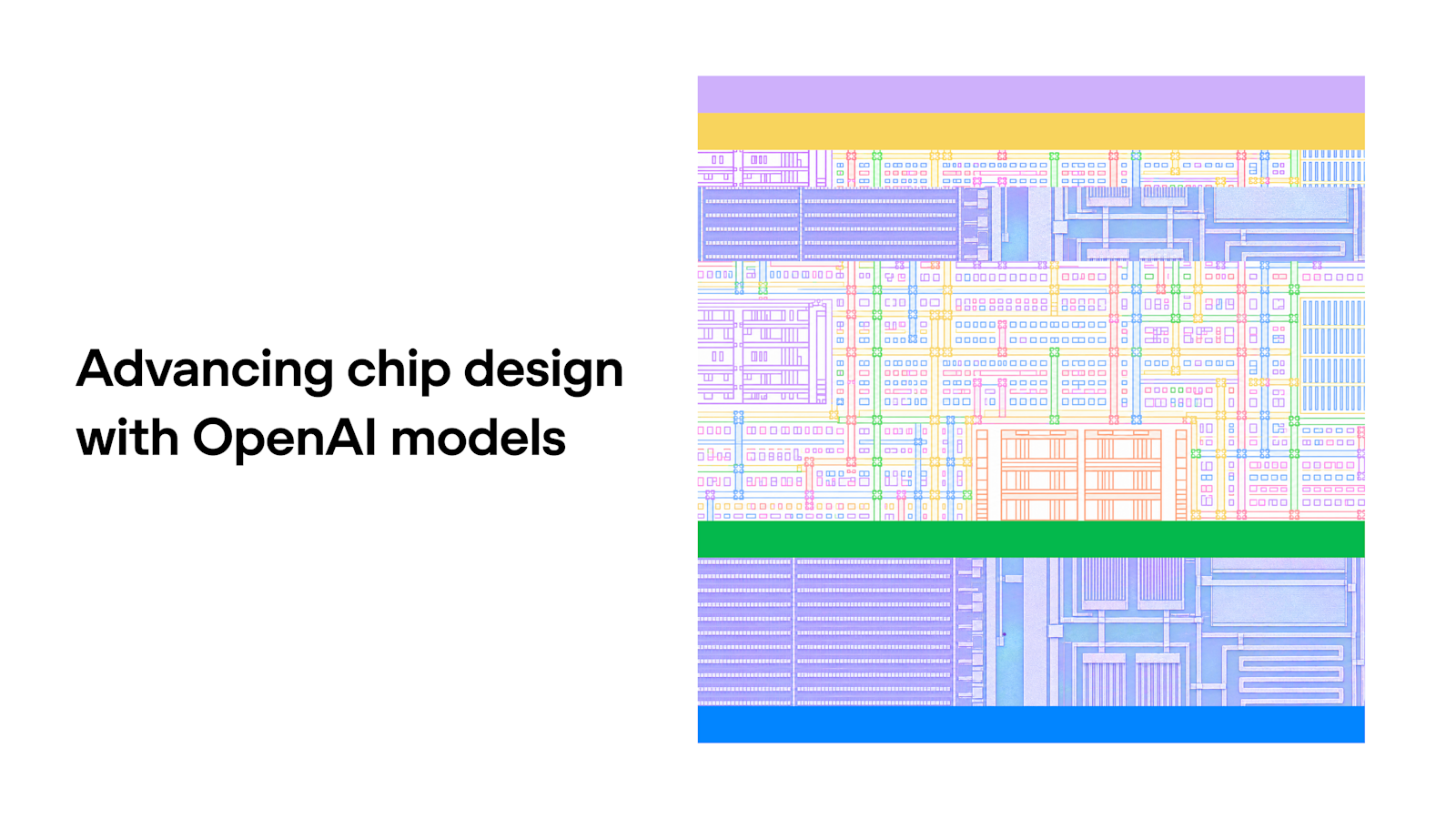
OpenAI reports model-proposed changes cut about 10–13% of standard-cell area in its Jalapeño chip and found up to 14% PPA gains on AMD GPU IP. The AI-designs-AI-hardware loop is real, and the evidence is still mostly in-house.
Key takeaways
- OpenAI estimates model-proposed changes cut standard-cell area about 13% in Jalapeño’s vector unit and 10% in its matrix unit, silicon-proven at bring-up.
- One multiplier redesign used about 15% less area and cut latency from two cycles to one.
- With AMD, OpenAI reports up to 14% PPA improvement on flagship GPU IP versus heavily optimized baselines; some changes are already in a design sent for manufacturing.
- AMD verified single-digit percentage PPA gains on key blocks of its upcoming flagship CPU.
- On open RISC-V benchmarks, GPT-6.2 Astra scored highest; OpenAI is training GPT-Synopsys with Synopsys to use EDA tools like an expert.
From chatbots to circuits
OpenAI’s chip-design post is a progress report on one of the most consequential uses of frontier models: designing the hardware that runs them. In August the company said its models helped build Jalapeño, its first custom inference chip. Now it gives specifics. Starting with GPT-o3 mini in early 2025, models proposed changes to floating-point adders, multipliers, conversion functions, reduction logic and dot-product circuits. OpenAI estimates those changes cut standard-cell area by about 13% in the vector unit and 10% in the matrix unit, and says they were silicon-proven during bring-up.
Individual results are concrete. One multiplier redesign used about 15% less cell area in synthesis and cut latency from two clock cycles to one, which is a rare win on both size and speed. A separate adder redesign saved about 15% area at the same latency. These are the kinds of micro-architectural gains human teams chase for months.
The AMD result is the headline
The bigger claim involves someone else’s silicon. Working with AMD, OpenAI reports up to 14% improvement in power, performance and area (PPA) against heavily optimized baselines on flagship GPU IP, by rewriting SystemVerilog RTL. OpenAI calls this roughly a year of progress in under five months. AMD has put some changes into a design sent for manufacturing and others into production files for future versions. AMD also verified single-digit percentage PPA gains on key blocks of its next flagship CPU using model-written designs. Each rewrite was checked with Synopsys tools to confirm unchanged behavior.
That third-party adoption matters more than any benchmark. A chipmaker putting model-written RTL into a tape-out is a strong vote of confidence. There are caveats. “Up to 14%” is a best case, not an average. The comparison of a year of progress in five months is OpenAI’s framing. And we haven’t seen AMD’s own account of how much human review each change needed. Still, this is a meaningful step past demos.
Benchmarks, and an honest limitation
To track progress between model generations, OpenAI tested models on two open-source RISC-V cores, PicoRV32 and Ibex, both by optimizing existing RTL and by designing from a written specification. Across 9,881 scored runs, GPT-6.2 Astra scored highest at a budget of about 112,000 tokens, and on PicoRV32 its score was about twice GPT-6 Astra’s. All models did better designing from a specification than improving existing code. OpenAI notes why that may flatter the results: designing from scratch let models skip features like performance counters that don’t help throughput. It suggests adding those requirements, tighter area limits and post-synthesis timing checks to make the test more realistic. That kind of self-critique is welcome.
The larger story is the loop. Models help design chips; better chips train better models. OpenAI’s own research-acceleration reporting frames recursive self-improvement as something to monitor, and hardware is part of that loop. Partnering with Synopsys on GPT-Synopsys, a model trained to use EDA tools like an expert designer, makes the trend industrial. It also raises a competitive question. If frontier labs control the best chip-design models, chipmakers become customers of the labs they supply.
Who it matters to
- Chip designers
- Model-proposed RTL rewrites are moving into production flows; verification skills become more central.
- AMD and rival chipmakers
- Early access to model-driven PPA gains could be a competitive edge, and a dependency on OpenAI.
- EDA vendors
- Synopsys is positioning as the trusted verifier inside AI design loops.
- AI safety watchers
- AI improving AI hardware is a concrete channel for self-acceleration.
What to watch
- AMD’s own disclosure of how model-written changes performed in shipping silicon.
- Release details and availability for GPT-Synopsys.
- Tougher RISC-V tests with feature requirements and post-synthesis timing.
- Whether other chipmakers, or rival labs, announce similar results.
- Performance of Jalapeño in OpenAI’s production inference fleet.
FAQ
What is Jalapeño?
OpenAI’s first custom inference chip, whose design used model-proposed improvements starting in early 2025.
What did OpenAI do with AMD?
Its models rewrote RTL on AMD’s flagship GPU IP for up to 14% PPA improvement; some changes are in a design sent for manufacturing.
Which model performed best on RISC-V tests?
GPT-6.2 Astra had the highest average score on both PicoRV32 and Ibex at a budget of about 112,000 tokens.
What is GPT-Synopsys?
A model OpenAI is training with Synopsys to use electronic design automation tools the way expert chip designers do.
Companies: OpenAI
More on OpenAI
AI · Nov 11, 2026
OpenAI’s $2 million for children’s AI safety research matters for one promise: publishing bad newsAI · Nov 3, 2026
OpenAI’s GPT-5.6 Cyber reaches AWS GovCloud through Daybreak Red, with two approval gatesAI · Oct 29, 2026
OpenAI’s new Model Spec swaps rules for five values, trading auditability for judgmentAI · Oct 29, 2026
Inside OpenAI’s misalignment monitors: what they catch, and where they still go blind