AI/ML is becoming a performance factor in motorsport
Oct 7, 2026, 6:56 AM · Ars Technica
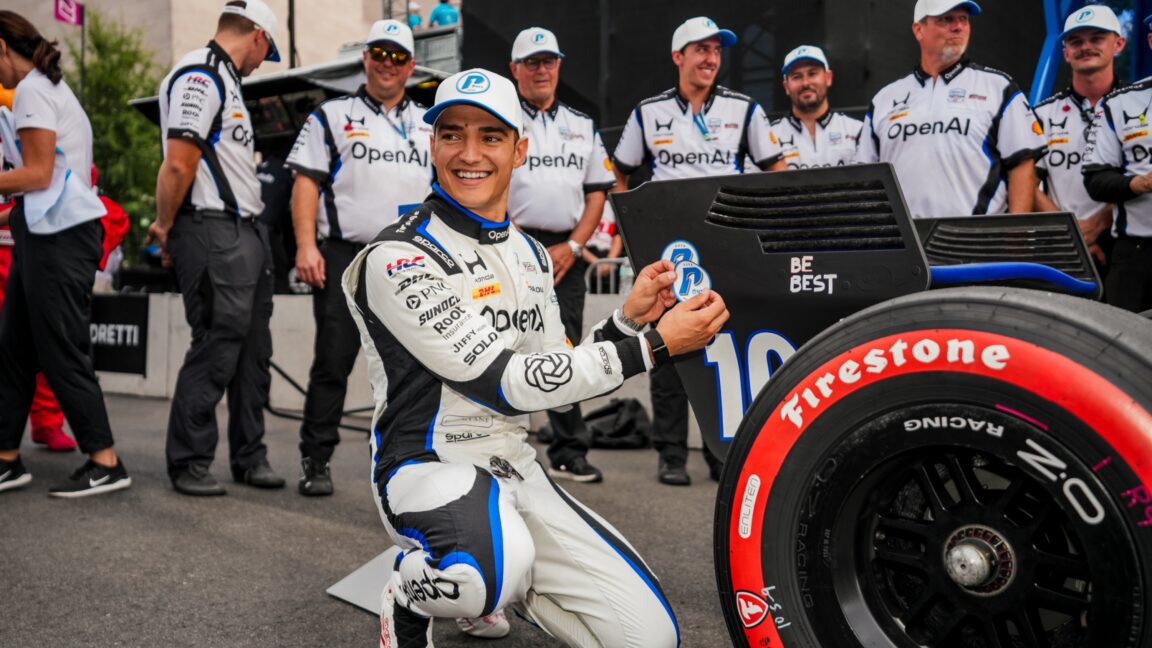
OpenAI is no longer just a logo on Álex Palou's IndyCar; it has been helping Chip Ganassi Racing tune setups, and racing is about to learn what an AI edge is worth.
Why it matters
Motorsport sponsorship used to mean tobacco and alcohol money. Today the cars are covered in crypto, cybersecurity and AI brands. Ars Technica reports that OpenAI has gone a step further with Chip Ganassi Racing this IndyCar season: one of its researchers has worked with the team and its champion driver on optimizing car setups. The collaboration is the subject of a YouTube documentary series whose second episode has just been released.
The team was already the class of the field. Ganassi drivers have taken 13 championships in roughly two decades, and Palou just sealed his fifth title in six seasons, winning a third of the 18 races and taking eight poles. When OpenAI's colors replaced DHL's on his car in Washington, DC, he took pole on the new track. The race itself went poorly.
From the desk
We like this story because it puts AI where it tends to earn its keep: in a data-heavy engineering problem with a clear scoreboard. Race car setup is a tangle of interacting choices made with limited track time. Tools that help engineers search that space faster are a natural fit, and motorsport has a long tradition of treating method as an advantage. Ars invokes Mark Donohue's 1975 book The Unfair Advantage, which made exactly that case for careful engineering.
But we should be honest about what we do not know. The report does not quantify what the AI contributed, and it would be hard to. Palou had the most dominant team and the best record on the grid before this partnership. A pole in DC followed by a bad race is a good reminder that setup is one variable among many. And a documentary series made with the sponsor is marketing as much as it is evidence. The likelier read is that AI was one input to an already elite process, not the reason that process wins.
The broader trend is real, though. Ars points to General Motors using AI to predict caution periods from radio traffic and to analyze crash photos from trackside photographers within seconds. IBM and Dallara published research earlier this year on training AI on computational fluid dynamics data to speed up aerodynamic development, and more than one Formula 1 team works with a company called Neural Concept on similar ideas.
What I'm watching is the fairness question. Racing series cap budgets, testing and wind tunnel time precisely so money does not decide everything. When the richest technology companies can supply research talent and compute as part of a sponsorship, the gap between the best-funded teams and the rest could widen in ways the rulebook was never written for. We are not predicting a crackdown. But if AI setup work becomes decisive, sanctioning bodies will eventually have to decide whether it counts as engineering or as an unregulated resource.
Context
Ganassi's IndyCar program runs on Honda power, while many of its closest rivals are supported from GM's motorsport base in Charlotte, North Carolina, which also supports Cadillac's new Formula 1 team. The amateur end of the sport shows the same money shift: Ars notes that tech founders, including co-founders of GitHub, CrowdStrike and Shopify and the creator of Ruby on Rails, raced at the latest Petit Le Mans.
Who feels it
- Race teams
- AI-assisted setup and aero work is becoming part of the competitive toolkit, and teams without a tech partner may feel the gap.
- Series regulators
- Existing limits on testing and development time may not anticipate sponsor-provided AI research. The rules question is coming.
- AI companies
- Motorsport offers a public, measurable showcase. It also makes any failure very visible, as the DC race showed.
- Fans
- Expect more talk of algorithms in the paddock. The driver and team still decide races, and the data so far does not say otherwise.
What to watch
- Whether OpenAI or Ganassi share any measurable results from the setup collaboration beyond the documentary
- Other IndyCar or F1 teams announcing comparable AI research partnerships with sponsors
- Any move by sanctioning bodies to address AI-assisted development under existing testing or budget rules
- Whether the partnership continues into next season and expands beyond one-off races
Companies: OpenAI