Gemini's Personal Intelligence is coming to cars
Oct 20, 2026, 1:00 PM · Ars Technica
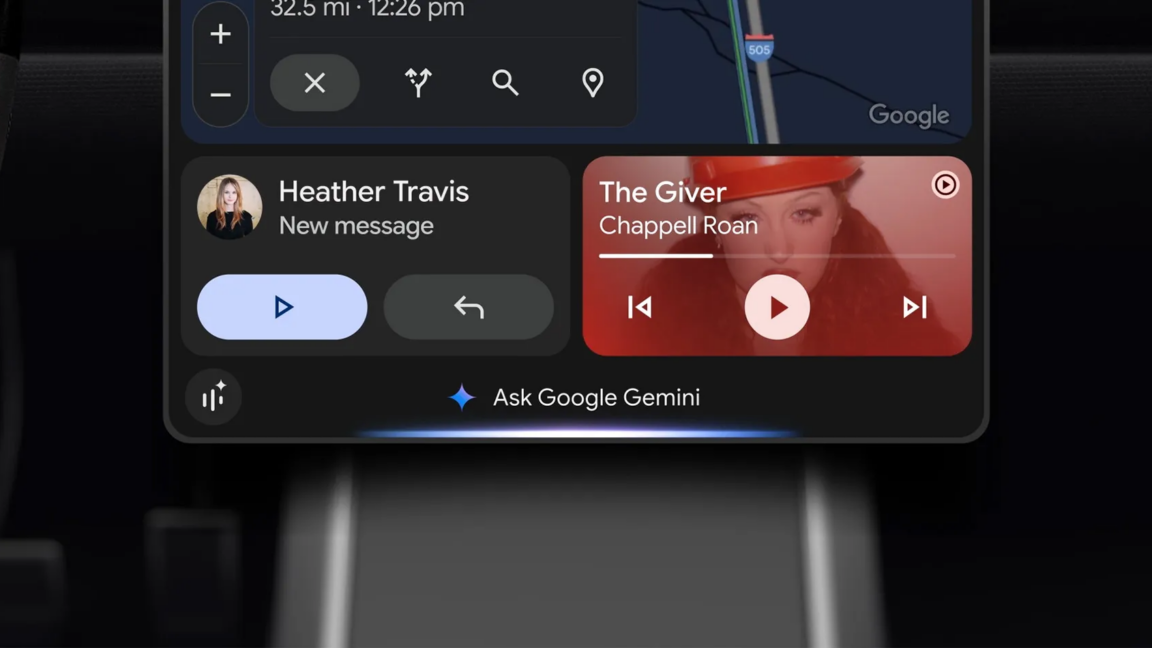
Letting Gemini read your calendar and photos to get you to the doctor is genuinely handy in a car. It also puts your account data on a shared screen.
Why it matters
Google is rolling out Personal Intelligence, the Gemini feature that draws on data from apps like Gmail, Calendar and Photos to answer questions, to Android Auto starting now, and to cars with Google built-in over the next few months. Ars Technica reports the feature is off by default.
In practice that means a driver can ask to be taken to a doctor's appointment and Gemini can find it in the calendar, or start navigation to a place found in a photo. The tradeoff is that the assistant in a shared space, the car, now knows a lot more about the account holder.
From the desk
We think this is one of the more defensible uses of personal context. Driving is where fiddling with detailed instructions is actually dangerous, and an assistant that already knows where the appointment is reduces the time eyes spend off the road. Google's argument that the AI works better when it knows the user is, as the reporter puts it, correct in an uncomfortable way.
The discomfort is the point to dwell on. A car is not a phone in a pocket. Passengers, kids, rideshare riders, colleagues borrowing the car can all see or hear what the assistant says. An answer built on someone's email or calendar can reveal things they did not mean to share with whoever is in the passenger seat.
The opt-in design is good, but it is weaker than it sounds. Ars notes that settings carry over from the phone to Android Auto, and that Google has a habit of nudging people to connect more data to Gemini, so some drivers may already have this enabled without realizing it. For Google built-in vehicles, personal results require a Bluetooth-connected device, and there is an in-car switch to turn it off. That in-car control is the right call, and we would like to see it on Android Auto too.
There is also the training question. Google says it does not train Gemini on personal data, but it does use inputs and outputs, which can contain personal details when these apps are connected, and it will not promise its filtering catches everything. That is a gap people should know about before they connect their inbox to their dashboard.
Where this leads if it scales: the car becomes another surface where a single company's assistant stitches together a person's life. Useful, yes. But the default posture should be minimal sharing in shared spaces, and today that still depends on each driver auditing their own settings.
Context
Google added Personal Intelligence to Gemini at the start of 2026, first as a paid feature and later for all users. Gemini has replaced Google Assistant across devices. The data connections live under Connected Apps in the Gemini app's settings, where Workspace, Search, Photos and other sources can be toggled individually.
Who feels it
- Drivers
- Hands-free, context-aware navigation is a real convenience, but it is worth checking which apps are connected.
- Passengers and families
- Shared screens and speakers can surface the account holder's personal information to others in the car.
- Automakers
- Cars with Google built-in get a feature later than phone-projected Android Auto, deepening reliance on Google's software layer.
- Privacy regulators
- Settings that carry across devices and output-based data use invite questions about meaningful consent.
What to watch
- Whether Google adds an Android Auto-specific switch for personal results
- Arrival timing and settings on vehicles with Google built-in
- Any reports of personal data surfacing to passengers
- How rival in-car assistants handle personal context
Companies: Google