AI · Nov 18, 2026
Gemini comes to budget Android phones, and that is a bigger deal than it soundsThe missing button is a footnote. Google’s new sidebar turns search into a running conversation
· Updated · Signal Desk newsroom
Analysis of reporting by Ars Technica. How we work
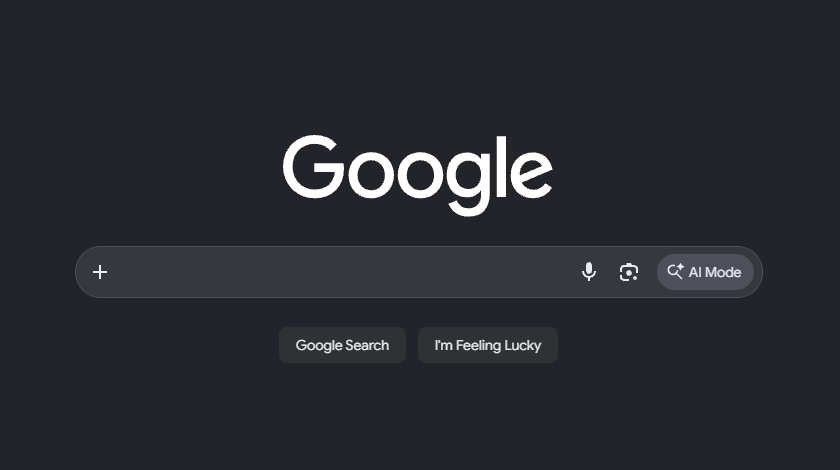
Google’s desktop homepage drops the Search button and adds AI shortcuts. The bigger change is a sidebar of saved AI Mode threads, which reframes search as an ongoing account rather than a one-off query.
Key takeaways
- Google is rolling out a redesigned desktop homepage after a test period of several weeks, confirmed on X by search VP Robby Stein.
- New buttons under the search bar lead to AI features: image generation, file analysis and brainstorming with Gemini.
- The Google Search button is gone; “I’m Feeling Lucky” stays.
- Logged-in users get an expandable left sidebar of recent AI Mode threads, also available on the results page.
- Stein said the sidebar made a big difference in how people progressed on their searches.
Small change, loud signal
Killing the Search button sounds like sacrilege, and the reaction online will treat it that way. The practical loss is close to nothing. As Ars Technica points out, autocomplete suggestions already covered the button as soon as you started typing, so almost everyone pressed Enter or clicked a suggestion anyway. Google surely has the usage data to back that up. If this were only about the button, it would be a footnote.
It is not only about the button. Google is redesigning the most valuable page on the internet so that its prime real estate points to AI. The row under the search bar now offers image generation, file analysis and a Gemini brainstorming shortcut. The classic search action is still there, but it is implicit, a keystroke rather than a visible choice. That is a statement about which behavior Google wants to cultivate.
The sidebar is the real product decision
The change with lasting consequences is the expandable sidebar on the left, showing recent AI Mode threads for logged-in users and following them onto the results page. Stein framed it as an easier way to pick up where you left off. That is a real benefit. Research tasks such as planning a trip, comparing insurance or untangling a medical bill rarely finish in one query, and a visible history makes multi-step work less fragile.
But a sidebar of threads changes what Google search is. A list of blue links is a stateless tool: you ask, you leave. A history of conversations is an account, and the sidebar looks a lot like the chat apps Google is competing with. It encourages people to return to Google’s own synthesized answers rather than to the pages those answers were built from. Coming days after Google put Gemini 4 Hydrogen behind every search, the direction is consistent: more of the journey happens inside Google’s interface, and less of it ends with a click to someone else’s site.
There is also a privacy dimension that deserves more attention than it will get. Saved AI Mode threads are, by design, a persistent record of what people were trying to figure out, often in more detail than a terse keyword query would reveal. Placing that record prominently on the homepage of a shared family computer or a work laptop is a design choice with costs, and Google has not described any new controls alongside the launch.
Where this goes
Ars raises the plausible endpoint: a day when AI Mode is the default and the traditional results page becomes the thing you opt into. Nothing in this rollout does that yet, and it is worth being precise about it. Ordinary searches still run on Enter, and links still appear. But every design cue is pointing one way. We saw a similar pattern when Google told schools they could switch off Gemini tools only by giving up search for students as well, a sign that the company no longer treats AI and search as separable products.
For most users, the AI shortcuts will be convenient and the missing button invisible. For publishers and anyone who depends on search traffic, a homepage that remembers your conversations is a harder competitor than a homepage that simply took your query.
None of this is inherently bad. A search engine that remembers context can save people real time, and the AI tools on the homepage will be genuinely useful for many tasks. The fair test is whether Google keeps the open web visible inside that experience, with prominent links and sources, or lets the sidebar quietly become the destination.
Who it affects
- Everyday searchers
- Little practical change for Enter-key users; more prompts to start AI conversations instead of searches.
- Publishers
- A persistent thread history keeps users inside Google’s answers, adding pressure on referral traffic.
- Shared-device users
- Recent AI Mode conversations surface on the homepage when logged in, which may expose sensitive queries.
- Rival chat apps
- Google is bringing a chat-style history directly to the world’s most visited starting page.
What to watch
- Whether the same layout arrives on mobile, where most searches happen.
- Controls for hiding or clearing the AI Mode sidebar, and whether it is on by default for all logged-in accounts.
- Any move to make AI Mode the default results view for some queries.
- Publisher traffic data in the weeks after the rollout.
FAQ
Can I still run a normal Google search?
Yes. Pressing Enter or clicking an autocomplete suggestion still runs a standard search. Only the dedicated Google Search button was removed; “I’m Feeling Lucky” remains.
What is the new sidebar?
For logged-in users, an expandable panel on the left of the homepage and results page that lists recent AI Mode search threads so they can be resumed.
What new buttons appear on the homepage?
Buttons for image generation, analyzing files and brainstorming with Gemini now sit under the search bar on desktop.
Companies: Google
More on Google
AI · Nov 10, 2026
Gemini 4 Carbon opens to developers at Argon’s price until November 30, then doublesAI · Nov 10, 2026
Gemini for healthcare targets prior authorization, the paperwork where patients have the most at stakeAI · Nov 12, 2026
ChatGPT, Gemini and Perplexity sent shoppers to fake stores in a 6,795-answer testAI · Nov 4, 2026
Schools can switch off Gemini but not AI in Google Search, and DuckDuckGo sees an opening