Our newest AI Quest: Mapping the human brain
Oct 26, 2026, 9:00 AM · Google AI Blog
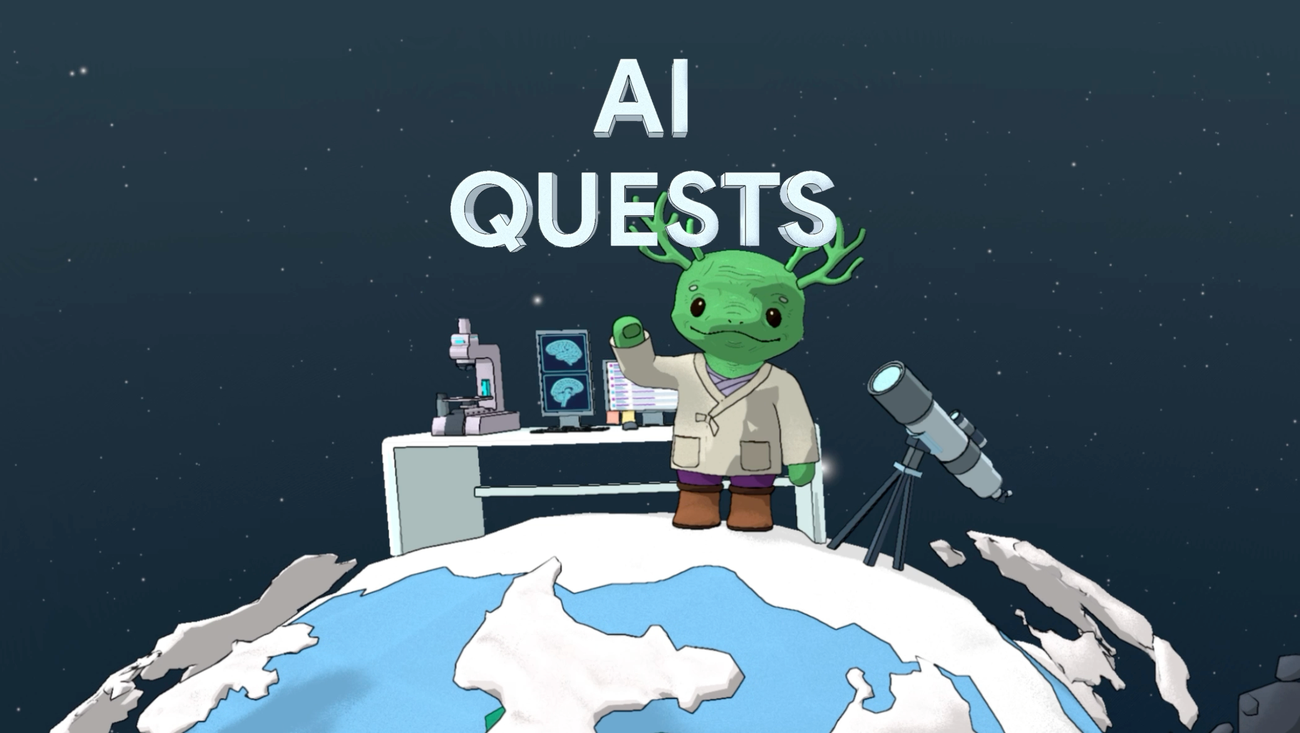
Google's new classroom game teaches middle schoolers to map neurons with AI, and its best lesson may be the unglamorous one: models need people checking the data.
Why it matters
Google Research and the Stanford Accelerator for Learning have launched Polar Peaks, the third game in their AI Quests series for students ages 11 to 14. Players act as researchers, scanning and mapping neurons to understand a character's memory loss, and along the way they clean data and test models.
Google says more than 400,000 quests have been completed so far across 10 languages. Teacher training modules are rolling out through the Google AI Educator Series, with the module for this new quest due next month. AI literacy for kids is quickly becoming a standard part of school, and the companies building the models are the ones offering to teach it.
From the desk
We like what this quest teaches. Most AI lessons for kids stop at prompting a chatbot. Polar Peaks has students do the work that actually decides whether AI is trustworthy: cleaning messy data, testing a model, and noticing when it gets things wrong. Google says the game stresses that AI needs careful human oversight and critical thinking. That's the right message for 12-year-olds, and frankly for a lot of adults.
The science behind it is real, too. The quest draws on Google's decade of connectomics research, the work of mapping neural networks in the brain, and it closes with two researchers involved in the recent complete map of the fruit fly brain. Showing kids that AI speeds up careful science, instead of replacing it, is a healthier frame than the usual hype.
Still, we should be clear about who's teaching. This is a Google product teaching AI literacy using Google's own research as the hero story. The earlier quests were built around Google's flood forecasting and diabetic retinopathy work. These are good projects, but a curriculum where one company supplies the examples, the tools and the teacher training shapes how a generation thinks about what AI is and who builds it. Real literacy should include the hard cases too: biased data, privacy, models that fail quietly, and companies with commercial interests.
If this scales, and 400,000 completions suggests it can, schools get free, polished, award-winning material. That's a real benefit for underfunded classrooms. The risk is that corporate-produced lessons become the default curriculum because nothing else is as easy to adopt. I'm watching whether educators use these quests as one input among several, or as the whole course.
Context
AI Quests began with flood forecasting and eye disease detection, each tied to a Google Research project. Google says the series won a 2026 Webby Award for AI Education, Learning & Training and a Best Global K-12 Learning Solution award at the ETIH Innovation Awards. Teacher modules for the first two quests are already available.
Who feels it
- Students
- A hands-on intro to data cleaning, model testing and oversight, set in real neuroscience instead of chatbot tricks.
- Teachers
- Free training modules lower the barrier to teaching AI literacy, though the Polar Peaks module isn't out until next month.
- Schools and districts
- Polished corporate curriculum is easy to adopt; balancing it with independent material is on them.
- Researchers
- Connectomics gets a public showcase that may draw young people toward brain science.
What to watch
- Release of the Polar Peaks teacher training module next month
- Growth past 400,000 completed quests and expansion beyond 10 languages
- Whether future quests cover AI failures, bias and privacy, not just success stories
- Independent or competing AI literacy curricula gaining traction in classrooms
Companies: Google