Researchers use AI to design proteins that cut up other proteins
Oct 14, 2026, 10:10 AM · Ars Technica
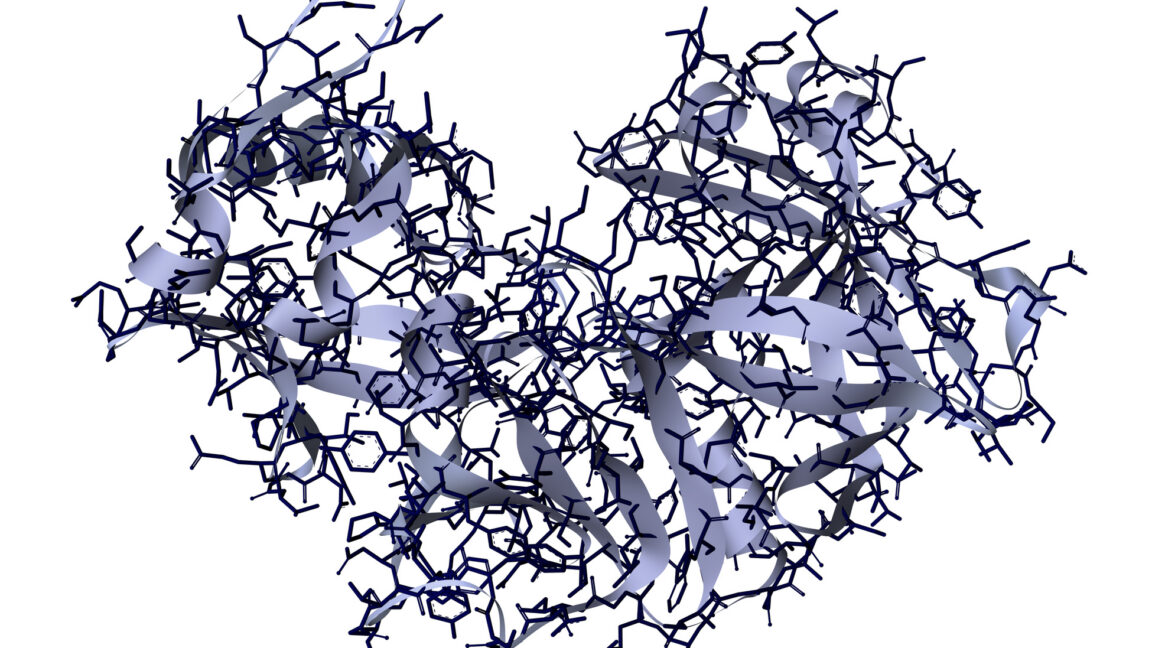
Baker lab researchers used AI design tools to build working protein-cutting enzymes from scratch — a real advance that also shows AI is great at structure, not yet at activity.
Why it matters
Researchers mainly from David Baker's lab at the University of Washington used RFdiffusion2 and ProteinMPNN to design new proteases — enzymes that break peptide bonds, which are otherwise stable for hundreds of years in water. Starting from the catalytic cores of a crayfish zinc protease and a yeast cysteine protease, they designed entirely new surrounding structures tuned to cut specific target sequences. Results appear in two Nature papers.
Initial designs worked but were much less active than natural enzymes. After targeted mutations, the best versions accelerated peptide-bond cleavage by factors of a billion to ten billion while staying specific. The team also designed zinc proteases that cut proteins associated with Alzheimer's and frontotemporal dementia in cells.
From the desk
This is the kind of AI story we're glad to lead with. Designing a functioning enzyme — not just a protein that folds, but one that performs precise chemistry on a chosen target — is a hard problem, and the tools cleared it.
The honest part of the research is what makes it trustworthy. The authors say plainly that the software matched every physical constraint but couldn't be told to produce a specific catalytic activity. The designs needed old-fashioned mutation screening to become good enzymes. AI handled the architecture; the experiments delivered the performance.
The disease angle is exciting and far off. Ars lays out the hurdles: delivering proteins where they're needed, immune responses, and likely gene delivery for targets inside cells. We'd treat therapy talk as a direction, not a timeline.
We'd also name the dual-use question that comes with any tool that designs proteins to cut other proteins. Biosecurity screening and responsible release practices need to grow alongside capabilities like this.
Still, the trajectory is clear: custom enzymes on demand, for medicine, industry and research. That's useful AI.
Context
Baker shared the 2024 Nobel Prize in Chemistry for computational protein design. RFdiffusion and ProteinMPNN are open tools widely used in the field.
Who feels it
- Biomedical researchers
- A route to custom proteases targeting disease-linked proteins.
- Industrial biotech
- Designer enzymes could enable tailored protein processing.
- Biosecurity community
- More capable design tools raise screening and oversight questions.
What to watch
- Design tools that can target catalytic activity, not just structure
- Animal studies on disease-protein targeting
- Biosecurity guidance for enzyme design tools