Southeast Asia’s digital economy to hit $368 billion
Oct 20, 2026, 9:00 PM · Google AI Blog
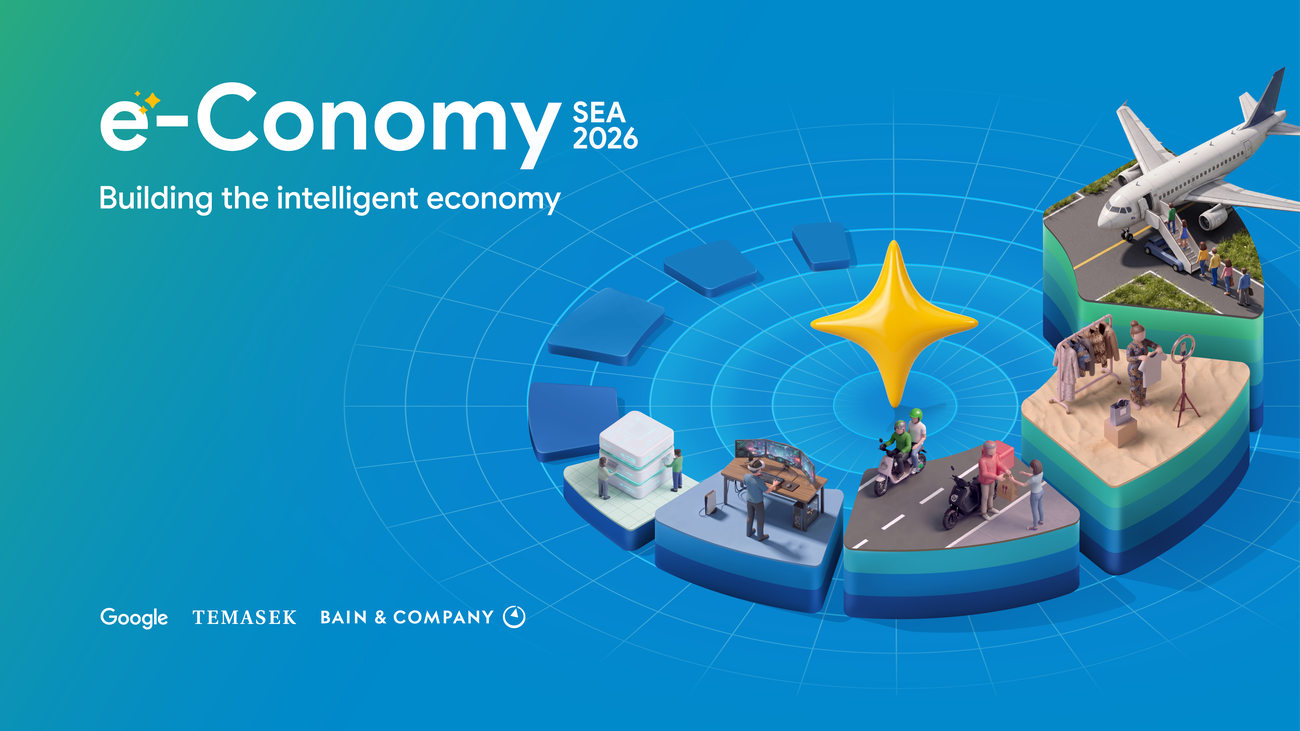
Google's annual Southeast Asia report says AI adoption is racing ahead of the mobile internet; the numbers are striking, and so is what people say they still need to trust it.
Why it matters
The 11th e-Conomy SEA report from Google, Temasek and Bain says the region's digital economy will grow 17% this year to $368 billion in gross merchandise value, and stays on track to pass $1 trillion by 2035. It counts 243 million people, 58% of the working population, actively using generative AI, and says that adoption is scaling four times faster than the mobile internet did.
It also projects a 60-fold surge in regional AI usage over five years, driven by confidence in agentic commerce, with 75% of users saying they are willing to let agents compare prices and complete purchases for them.
From the desk
We take this as a real signal with a big asterisk. Southeast Asia has been a mobile-first, leapfrogging market for a decade, and it makes sense that AI tools would spread quickly there. If generative AI is genuinely helping people shop, plan travel and get credit, that is a benefit to a lot of people in a fast-growing region.
The asterisk is the authorship. This is a Google-backed report on Google's own blog, and Google sells the search, AI and cloud products that benefit from these trends. The figures are survey- and model-based projections, not audited results. We would not dismiss them, but we would read them as the industry's best case.
The most useful part, to our eye, is what people say they need before handing tasks to agents: robust privacy safeguards at 44%, transparency about what AI can and cannot do at 36%, and the ability to reverse an agent's transaction at 30%. That last one is the detail we would underline. Willingness to let an agent spend money is only half the story; the infrastructure to undo a bad purchase is barely built anywhere.
The report is also blunt about the physical cost. It calls for roughly a tripling of data center capacity in five years, and points to rules like Singapore's binding power-efficiency standards and Malaysia's renewable supply scheme. That is the right instinct. A region racing to triple compute will feel it in power grids and water use.
Where this leads if it scales: hundreds of millions of people letting agents transact on their behalf, in markets with varied consumer protection. The upside is convenience and access. The downside is fraud, errors and disputes at a scale regulators have not handled. We are watching whether the trust conditions are built as fast as the adoption curve.
Context
By sector, the report puts e-commerce at $226 billion GMV, up 18%; online travel at $59 billion; online media at $44 billion in revenue; mobility and food delivery at $40 billion; and digital financial services at $1,650 billion in gross transaction value. It points to the ASEAN Digital Economy Framework Agreement, expected in November 2026, as a region-wide digital trade pact.
Who feels it
- Consumers
- AI assistants could make shopping and finance easier, but reversal rights and privacy protections lag the enthusiasm.
- Merchants and platforms
- Agentic commerce could shift who controls discovery and checkout toward whoever runs the agent.
- Regional governments
- Data center growth and the coming ASEAN digital pact will force decisions on energy, efficiency and cross-border data.
- AI vendors
- A projected 60-fold usage jump makes the region a priority market and a test of affordable inference.
What to watch
- The final text and timing of the ASEAN Digital Economy Framework Agreement
- Whether platforms add clear refund and reversal tools for agent purchases
- Data center approvals and energy rules in Singapore, Malaysia and neighbors
- Independent data that confirms or tempers the adoption figures