Ukraine’s drones knock out AI data center belonging to "Russia’s Google"
Oct 9, 2026, 3:04 PM · Ars Technica
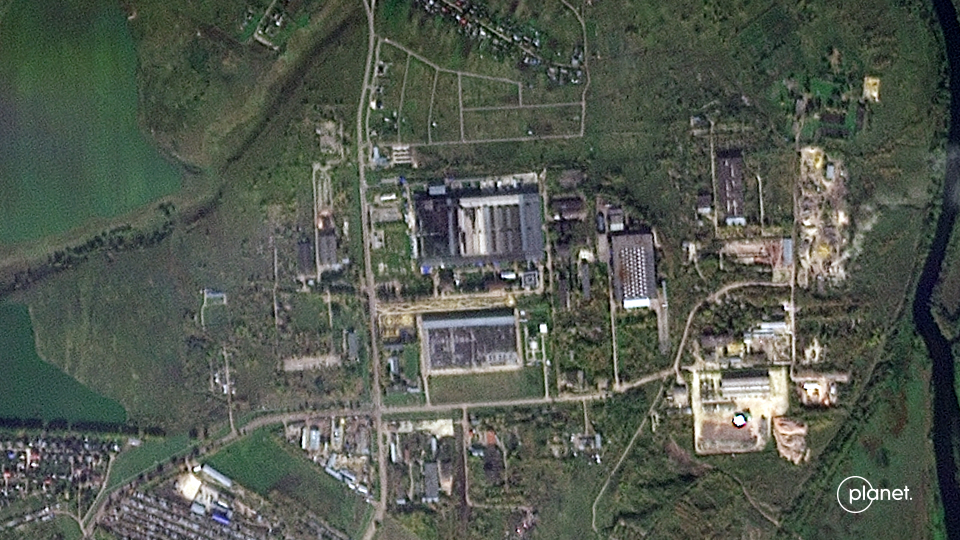
Ukraine's strikes on Yandex's AI data centers make one thing plain: the compute behind chatbots and everyday apps is now treated as wartime infrastructure, and it breaks like infrastructure.
Why it matters
Ukrainian drones have knocked out two of the five data centers run by Yandex, the company behind Russia's most popular search engine, according to Ars Technica, citing Reuters. The strikes hit facilities in the Sasovo and Kaluga regions on October 8 and 9. The Sasovo site houses two of Yandex's three supercomputers used to train its YandexGPT model, and Kaluga is the company's largest data center.
The damage did not stay inside one company. Yandex said no employees were hurt but acknowledged service disruptions, and Russian users reported trouble reaching media sites, the Ivi streaming service, the digital bank T-Bank and the state-owned Russian Railways. Ukraine framed the strikes as a direct answer to a Russian drone campaign against Ukrainian data centers that has disrupted phone and internet service for thousands of Ukrainians since late September.
This matters beyond the front line. When a single operator's data centers go dark, a bank, a railway, a streaming app and a soccer club's website all wobble at once. That is what concentrated compute looks like under pressure.
From the desk
We want to be careful here, because this is a war story first and a technology story second. People in both countries are living through attacks on the systems they rely on to call family, bank and travel. Ukraine's president called this a "symmetrical response" to Russia's campaign against Ukrainian data centers, and the timeline in the reporting supports that framing: Russia's strikes on Ukrainian data infrastructure came first. We are not going to referee the targeting choices of a country defending itself from a full-scale invasion. What we can do is read what this says about AI infrastructure.
The first lesson is that data centers have crossed a line. This year they have become targets more than once. Ars notes that after the United States and Israel attacked Iran in February, Iranian drones knocked out multiple Amazon data centers in Bahrain and the United Arab Emirates. Now a national AI champion has lost training capacity and live services to one-way attack drones. Compute is being treated the way power plants and refineries have been treated for a century.
The second lesson is about concentration. The modern AI pitch is scale: bigger clusters, fewer and larger sites, more services riding on the same backbone. That is efficient in peacetime. Under attack, it means one hit can take out a chatbot, a bank and a railway's apps together. The services knocked offline here, from a dating app to a real estate aggregator to a self-publishing platform, show how much ordinary life now runs through a handful of facilities.
I'm also watching what this does to AI development itself. Losing a site that held two of three training supercomputers is a real setback for a model program, and sanctions make that hardware hard to replace. The likelier read is that Yandex's near-term effort shifts to keeping inference running for users rather than training the next model.
Where this leads if it becomes normal is uncomfortable. If data centers are legitimate targets, then every country building sovereign AI capacity has to think about air defense, redundancy and geographic spread, not just chips and power contracts. The cost of AI goes up, and the civilians who depend on those services carry the risk. We think the industry has been slow to say that out loud. The Black Sea ship sinkings near Romania and Bulgaria earlier this month are a reminder that this war's edges are moving, and infrastructure is on them.
Context
Russia has launched mass missile and drone attacks on Ukrainian cities, power infrastructure, transportation hubs and residential buildings since its full-scale invasion in February 2022. Ukraine has expanded its own medium- and long-range drone campaign against military bases, supply lines, Russian-linked shipping and energy sites such as refineries, and this summer it struck warehouses belonging to Wildberries and Ozon. Ukrainian company Firepoint said its FP-1 drones were involved in the Kaluga strike, per Reuters.
Who feels it
- Russian users and businesses
- Banking, streaming, transit and media services that depend on Yandex infrastructure saw disruptions, showing how many services share the same backbone.
- Ukrainian civilians
- Russia's campaign against Ukrainian data centers has already disrupted phone and internet service for thousands since late September, and escalation risks more.
- AI labs and cloud operators
- Physical security, redundancy and geographic spread are now part of the cost of running large AI clusters, not an afterthought.
- Governments building sovereign AI
- National compute is now visibly a strategic target, which raises questions about defense and resilience planning.
What to watch
- How quickly Yandex restores affected services and whether its AI chatbot stays degraded
- Whether either side keeps targeting data centers or the campaign widens to other tech firms
- Any public word on the state of YandexGPT training after the Sasovo strike
- Whether cloud and AI operators elsewhere change how they disclose or defend physical sites
Companies: Google