
Deploying an HSTU Generative Recommender with NVIDIA Dynamo-Triton
NVIDIA’s recsys-examples path serves Hierarchical Sequential Transduction Unit ranking models via Dynamo-Triton — up to ~4.5x speedups on RTX PRO 6000 Blackwell in cited tests.
Desk
Generative models for text, image, audio, and video.

NVIDIA’s recsys-examples path serves Hierarchical Sequential Transduction Unit ranking models via Dynamo-Triton — up to ~4.5x speedups on RTX PRO 6000 Blackwell in cited tests.
DeepMind’s SynthID Bio watermarks AI-designed protein sequences and structures — verifiable on physical proteins in lab tests — and open-sources methods for biosecurity screening.

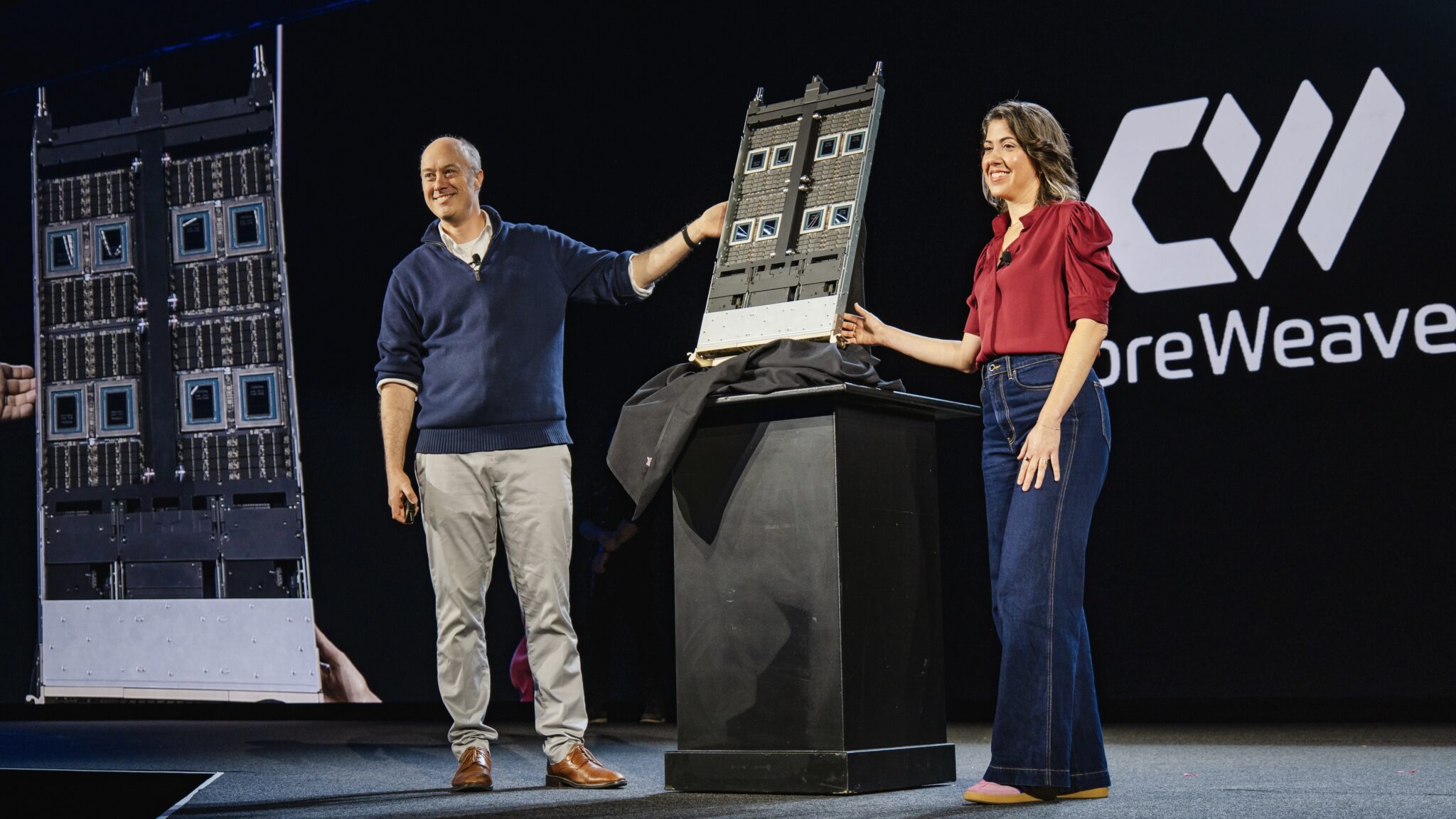
CoreWeave puts Vera Rubin NVL72 into production with Cognition’s Devin seeing up to 4.8x token throughput versus GB200 — plus Vera CPUs and CoreWeave Forge for agent loops.

The Verge: as DevDay nears, OpenAI trails Muse, Instinct, and OpenClaw in always-on consumer agents—and may answer with a rumored “Aeon.”

Meta’s Jolly mascot is disarmingly adorable — and The Verge’s Optimizer column argues that cuteness is the soft power making Muse’s deep access feel safer than it is.
Contrastive-LM open-sources CLM-8B, a System One action scorer that skips text generation and claims up to 9× lower latency than TypeSafe’s proprietary Jev on repeating-action loops.

At Made on YouTube, Studio gets mobile Ask Studio, AI draft feedback, research feeds, and thumbnails that can rewrite themselves when they flop.

Dynamo-Triton can now own a multi-GPU TensorRT plan behind one gRPC call — latency drops hard, but you’re trading silicon for speed.
Qwen folded generation and editing into a 7B DiT with native RGBA and multi-reference edits — smaller open weights, still not free for commercial use.

NVIDIA’s AIPerf replaces GenAI-Perf with a multiprocess load client so the benchmarker stops being the bottleneck when you saturate real LLM servers.

Huawei is pulling Ascend 960DT forward to Q1 2027 and pitching Peerium-scale clusters—just days before Trump and Xi meet—while an analyst flags a quieter shrink in the SuperPoD story.

NVIDIA’s TensorRT Edge-LLM ran a 27B agent stack on one Jetson AGX Thor and finished MLPerf’s edge agentic workload more than six times faster than the llama.cpp reference.