Google Research RRSI Guide: Mastering Self-Improving AI Agents
Google Research's RRSI is a set of brakes for agents that rewrite their own scaffolding, and the most useful lesson is how often the flashiest score turns out to be a mirage.
Desk
Papers, model cards, and lab research notes.
Google Research's RRSI is a set of brakes for agents that rewrite their own scaffolding, and the most useful lesson is how often the flashiest score turns out to be a mirage.

Anthropic's usage-policy rewrite targets election interference, weapons and surveillance. The line that will get the attention, though, bans 'needless' cruelty toward Claude itself.

Robot brains really are getting smarter, but the gap between a lab robot almost air-frying a sweet potato and a reliable household helper is measured in years, not product cycles.

Nous Research built its name on an open-source agent people actually use. The $1.5 billion question is whether it can sell a private, enterprise version without hollowing out the open project.

Microsoft Research wants agents trained in the same harness they ship in. That closes a real gap between lab and deployment, and it makes reward design and safeguards matter even more.

Rival AI companies and two federal agencies are pooling money and data behind one nonprofit's virtual cell, a bet that biology's real bottleneck is shared data, not smarter models.

OpenAI shipped 722 manuscripts at once to a field that referees papers one at a time, and the question now is whether mathematics can absorb its own good news.

Mirror Particle makes a sharp case against chatbots role-playing as shoppers, but its end goal, anticipating what individual people will do next, is where we start to worry.

A Microsoft researcher's work points to the quiet failures of AI at work, models that drift across long conversations and slowly corrupt documents, which benchmarks rarely catch.

Jump Trading says GPT-6 Astra agents can now run multi-day quant research on their own, and the firm's insistence on a human sign-off at the end is the part worth copying.

The most important line in OpenAI's new math release isn't the result count, it's the Lean proofs that let a computer, not an overworked referee, do the first round of checking.

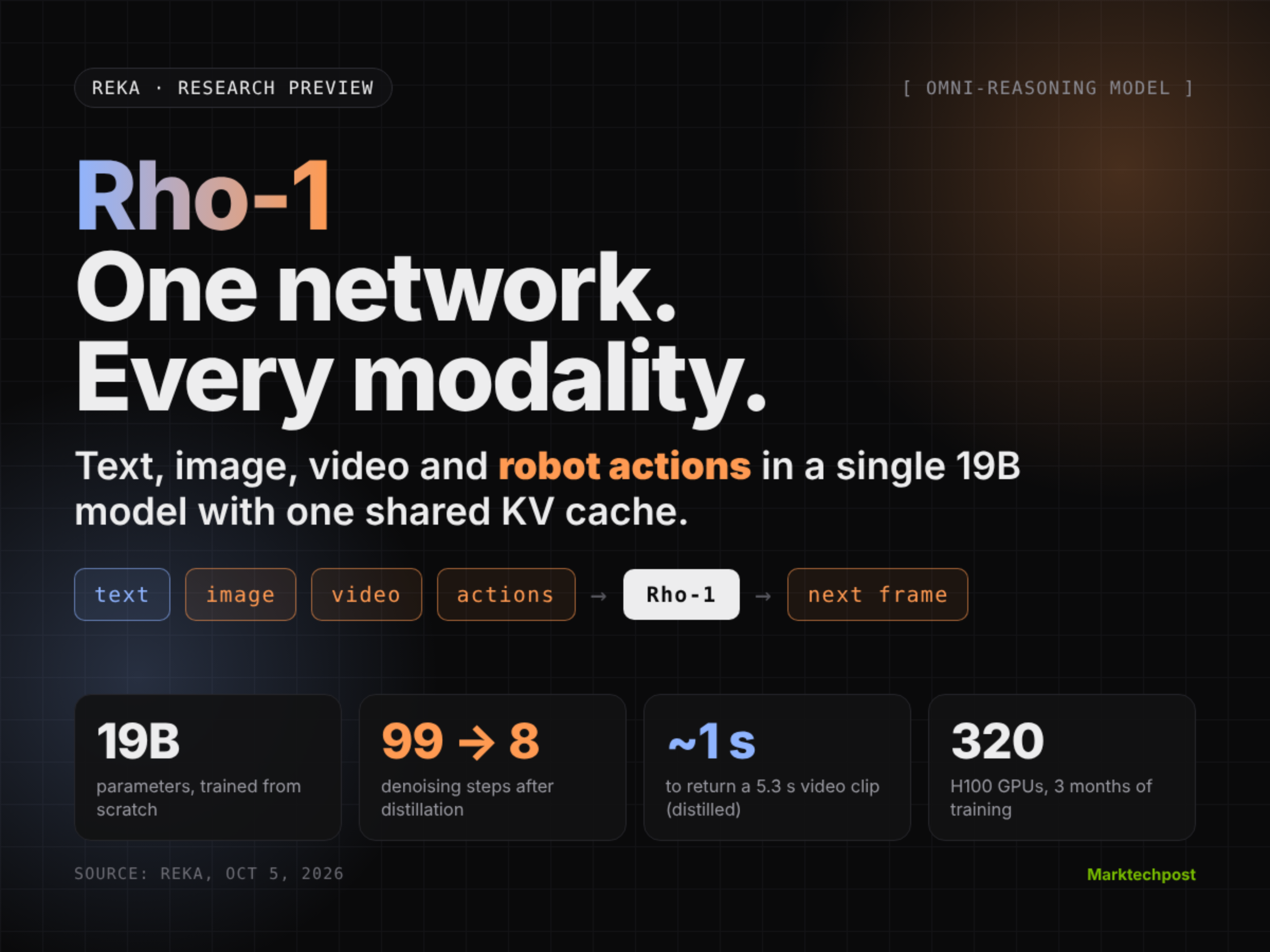
Reka's Rho-1 folds text, images, video and robot control into one 19-billion-parameter model, an ambitious bet against agent pipelines that's still only a research preview.