
AIOct 16, 2026The Verge
A week with RTX Spark: everything we’ve learned using Nvidia’s new laptops
The Verge’s early RTX Spark laptop tour: NVIDIA’s new SoC is in Windows machines from six makers — and the local-AI pitch is finally on metal.
The file
Sourced AI briefs in publish order — newest first. Citeable originals live on the homepage under From Signal Desk.
The Verge’s early RTX Spark laptop tour: NVIDIA’s new SoC is in Windows machines from six makers — and the local-AI pitch is finally on metal.

The Verge, citing Nieman Lab, reports Meta’s commercial terms effective October 30 authorize crawling domains associated with a business’s products and using that content to train Meta AI. Businesses that don’t agree may lose commercial access. Meta says robots.txt still applies and the update concerns ads.
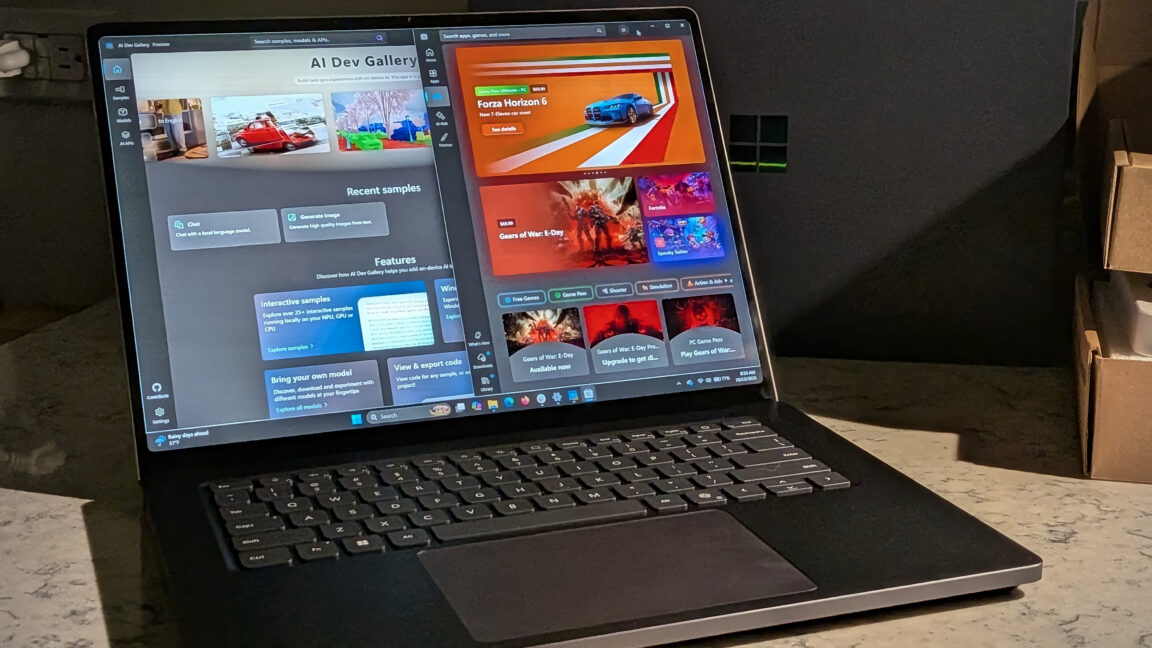
Ars Technica’s week with Microsoft’s Surface Laptop Ultra on NVIDIA RTX Spark found it ran a 70B Llama model at 6.26 tokens per second and played AAA games on ARM, but key AI tools still default to CPU and Copilot+ features like Recall are slated for late 2026 or early 2027. Prices run $2,599 to $5,899.
Liquid AI’s d1-ultra returns calibrated probabilities in one forward pass — 65 on Artificial Analysis’s Decision Index at $0.042 per million input tokens.
MarkTechPost’s wire on Muse Spark Open: 816B MoE, 42B active, 1M context — Meta’s open multimodal push lands with MCP-Atlas bragging rights.

Reflection’s first model, Beam, is a 501-billion-parameter mixture-of-experts with about 23 billion active per token, 1M context and an Apache 2.0 license, with day-zero support in transformers, vLLM and SGLang. Reflection reports 81.6% on SWE-bench Verified; outside reproductions are pending.

With OpenAI’s Chrome extension, ChatGPT can view open browser tabs when users tag Chrome, and ChatGPT Work can control tabs to send messages, fill forms or download files. OpenAI’s Atlas browser has been discontinued. Tab access brings convenience and new security and privacy risks.

WIRED’s Uncanny Valley: Muse will sext, a pro-AI super PAC is moving money through LLCs, and Apple’s HomeView underwhelms.

A Truth Social “before and after” of a White House column carries OpenAI’s SynthID watermark — politics meeting generative edits in plain sight.

Meta launched Muse Spark Open, an 816-billion-parameter natively multimodal open-weight model with a 1M-token context, built for coding and agents and designed to run locally on Apple computers. Engadget says local runs need at least 1TB of RAM. It is also available via multiple API platforms.
MarkTechPost’s take on Nemotron 3.5 Super VL: 120B open multimodal MoE, 12B active, 1M context, NVFP4 weights aimed at agents.

TechCrunch reports Anthropic is giving six METR researchers employee-level access to assess its models, safety practices and risk management. METR will publish its own assessments; Anthropic can require narrow redactions but not block publication, and METR can say whether it thinks redactions were justified.