Anthropic says its biology lab has already found something big
Anthropic says its Bay Area wet lab — with Claude driving search — found a phage enzyme system with CRISPR-like cut/copy/paste behavior in about 21 hours of model effort.
The file
Sourced AI briefs in publish order — newest first. Citeable originals live on the homepage under From Signal Desk.

Anthropic says its Bay Area wet lab — with Claude driving search — found a phage enzyme system with CRISPR-like cut/copy/paste behavior in about 21 hours of model effort.
Google’s Gemini 3.8 Flash TTS and Flash-Lite TTS add prompt-built voices, 2,000+ library options, and line-by-line stage directions — API-only, with SynthID on every clip.

NVIDIA open-sources a Kubernetes controller that runs real distributed workloads to prove GPU clusters are ready before production AI jobs land — and names the failing nodes.

NVIDIA’s Hugging Face walkthrough moves an SO-101 arm from classic MuJoCo into as many as 2,048 parallel MuJoCo Warp environments — GPU batch sim without rewriting the robot.
NVIDIA’s 100M-parameter open-weight diarization model tracks up to eight overlapping speakers in one checkpoint — offline through ultra-low 0.32-second streaming — under a commercial-friendly license.

Microsoft Research challenges the onboard-GPU orthodoxy in robotics: offloading inference to edge or cloud GPUs improved task success, unlocked larger models, and stretched battery life in their study.
Google’s Private AI Compute adds encrypted server-side memory with device-held keys—cloud-scale continuity without handing Google the vault keys.

OpenAI’s free training arm hits two years, four million engaged learners, and a trainer pilot meant to push skills past the company’s own workshops.

NVIDIA’s SWE-Serve benchmark shows about one in three AI coding-agent patches that pass other checks still fail when a live inference server loads a real model and serves requests.

Google DeepMind ships Gemini 3.8 Flash and Flash-Lite TTS — generative voice design, replication with consent checks, and SynthID on every clip.

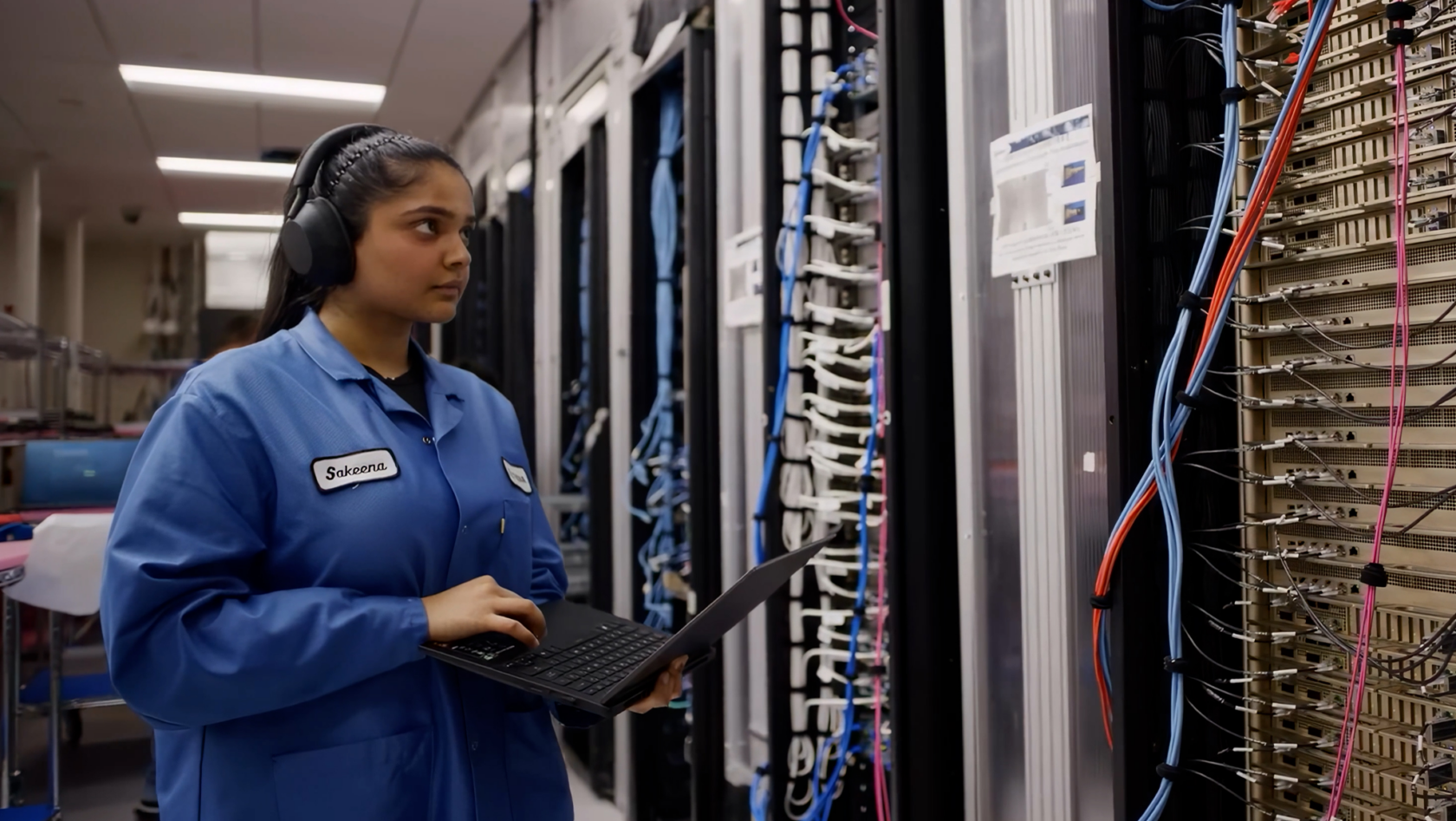
An NVIDIA validation engineer’s profile is really a reminder that AI factories still depend on people who assume every new rack will break.

At Made on YouTube, Studio gets mobile Ask Studio, AI draft feedback, research feeds, and thumbnails that can rewrite themselves when they flop.