Sakeena Fiza Helps NVIDIA Hardware Succeed at Scale
Sep 23, 2026, 8:00 AM · NVIDIA Blog
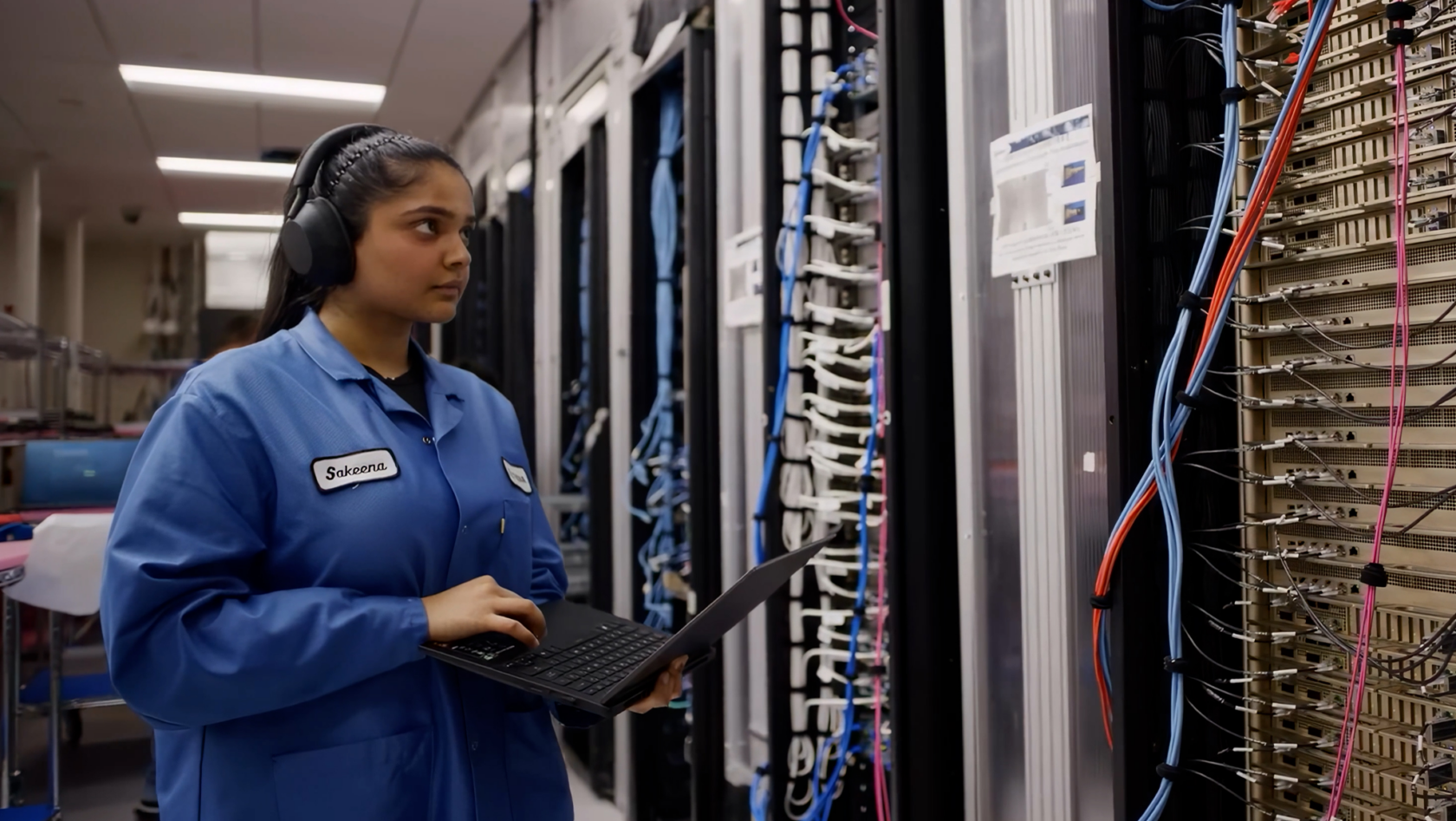
An NVIDIA validation engineer’s profile is really a reminder that AI factories still depend on people who assume every new rack will break.
Why it matters
NVIDIA’s September 23, 2026 life profile of validation engineer Sakeena Fiza puts a human face on the least glamorous layer of the AI boom: proving new hardware works from first power-on through customer deployment. Her lab work starts before a product is public — bring-up, integration, firmware and software swarming, then stress until failure modes show.
We’re drowning in model and deal headlines. This piece is a useful corrective. If Rubin-class systems and AI factories scale, they scale because validation teams catch issues before customers do — not because slides said the silicon was ready.
From the desk
We’re reading this as infrastructure journalism dressed as a people story. Fiza frames validation as detective work: get a system, ask how it can break, treat each failure as a mystery. That mindset is the opposite of launch-day hype, and it’s exactly what useful AI needs under the hood.
The strongest reported beat is collective: the first time a Rubin GPU enumerated at system level and the room cheered at a bland device string. Bring-up as “Avengers assembling” — architects, designers, software, firmware, validation — is corny and accurate. AI progress is not only training curves; it’s trays, racks, clusters, power integrity, thermals, screws, and dust in a customer facility.
Fiza’s path — Logo in Dubai, UC Irvine computer science and engineering, Mars rovers and UAVs — lands her in the whole-machine job she wanted. A board can hold tens of thousands of components; a rack can approach half a million. Those parts must behave as one system under stress across diverse AI factory configurations. When she says she wishes people understood how complex the hardware AI runs on is, we’re with her.
The downside of celebrating validation only as culture content is that it can sanitize pressure: schedule, yield, and customer SLAs still push teams to ship. Catching issues before customers catch them is the ethic. Missing one at rack scale is an outage and a trust hit. I’m watching whether NVIDIA and peers keep investing in validation capacity as model demand outruns manufacturing and deployment discipline.
Useful AI advocacy here means defending the unsexy work. Agents and chatbots get the spotlight; the people who refuse to believe a system until they’ve tried to kill it are why those demos survive contact with a real data center.
Context
NVIDIA Blog by Matthew Leib, September 23, 2026, in the NVIDIA Life series. Fiza works in the data center systems engineering lab; profile references Voyager co-working spaces and pipeline products including Rubin-generation hardware bring-up.
Who feels it
- Hardware / validation engineers
- Public recognition of failure-driven craft may help recruiting; the job still needs time and authority to block bad builds.
- Cloud and AI factory operators
- Customer-site variables (dust, power, thermals) remain first-class failure modes — lab pass is not deployment pass.
- Investors and buyers
- A reminder that schedule risk sits as much in system validation as in chip design or model training.
- Broader AI audience
- Counters the myth that software alone drives capability; physical systems engineering is on the critical path.
What to watch
- How Rubin-generation systems fare in early customer deployments after lab bring-up stories.
- Whether validation headcount and tooling keep pace with rack-scale complexity.
- Public postmortems when field failures escape lab catch — culture vs. schedule pressure.
- Peer coverage of manufacturing and site-acceptance practices across other accelerator vendors.
Companies: NVIDIA