Cities Worldwide Build and Scale AI Services With NVIDIA Physical and Agentic AI
Nov 2, 2026, 11:00 PM · NVIDIA Blog
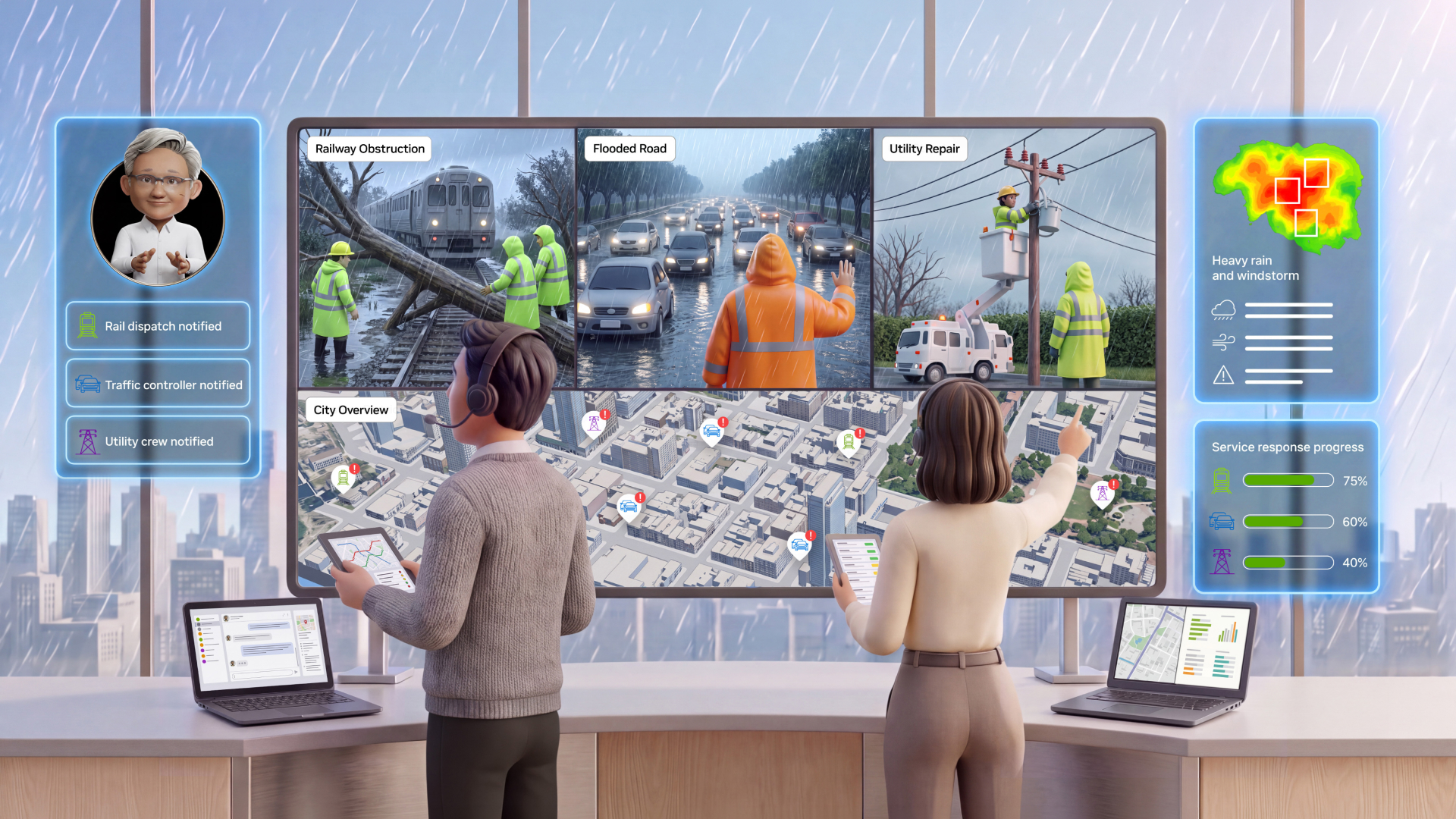
NVIDIA is pitching cities a shared AI stack for services, planning and surveillance cameras. The service gains are worth having, but turning camera networks into AI agents needs public rules first.
Why it matters
Ahead of Smart City Expo World Congress in Barcelona, NVIDIA rounded up city deployments built on its models and hardware: resident-service agents across Spain, vision agents reading city camera feeds in Poland and Malaysia, and digital twins for planning in Taiwan and industrial sites in Nigeria.
Some claims are specific. ITMAX in Malaysia is scaling vision agents toward more than 17,000 cameras by 2027 and says traffic simulation cut peak-hour corridor travel times by up to 26%. Linker Vision and MVRDV say they can simulate 15 years of urban canopy growth in 10 minutes.
The message to city governments is that getting started doesn't take a huge investment. That lowers the barrier for useful services and for surveillance alike.
From the desk
We see real upside here. Resident-service agents that handle appointments and routine municipal procedures in local languages can save people time, and Spain's 1MillionBot deployments, using open ALIA models from the Barcelona Supercomputing Center, are a good sign that this can be built with local and open tools. Planning tools that shrink a two-week design iteration to under an hour could make public consultation faster and better informed.
The vision agents are a different matter. Turning existing camera streams into searchable, summarized intelligence for mobility, safety and event response is a major expansion of what a city can know about people in public space. The cameras might already be there, but the capability isn't the same. A feed nobody watches is very different from one an agent can search and summarize on demand.
NVIDIA's framing stresses that local governments stay in control of how sensitive data is processed. That's a useful principle, but control isn't the same as limits. We'd want each city to publish what the agents look for, how long data is kept, who can query it, and whether it's shared with police or other agencies. The post doesn't address any of that, and it shouldn't be left to vendors.
Note the 26% figure is an upper bound from a partner, not an audited citywide result. Vendor blogs are a fair place to announce deployments and a poor place to verify them.
If this scales the way NVIDIA hopes, shared city AI infrastructure becomes normal municipal plumbing. That can be good. It needs the same public oversight as any other piece of civic infrastructure that watches residents.
Context
NVIDIA's post builds on initiatives announced at GTC Berlin and promotes its Cosmos world models, Nemotron open models, Omniverse and Metropolis libraries, and RTX PRO GPUs. Smart City Expo World Congress runs Nov. 3–5 in Barcelona.
Who feels it
- City governments
- Lower entry costs for AI services and planning tools, plus new governance duties for camera analytics and shared infrastructure.
- Residents
- Potentially faster municipal services, alongside expanded AI analysis of public camera footage.
- Local developers and startups
- Shared compute and programs like BSC's AI Factory Accelerator open a path to build civic applications.
What to watch
- Whether cities deploying vision agents publish retention, access and use policies.
- Independent measurement of claimed gains like ITMAX's travel-time reductions.
- Announcements from NVIDIA's Smart City Expo keynote and panel in Barcelona.
- How EU privacy and AI rules are applied to camera-based city agents in Wrocław and Spain.
Companies: NVIDIA