Europe’s Industrial Leaders Reinvent Engineering and Manufacturing With NVIDIA
Oct 21, 2026, 3:30 AM · NVIDIA Blog
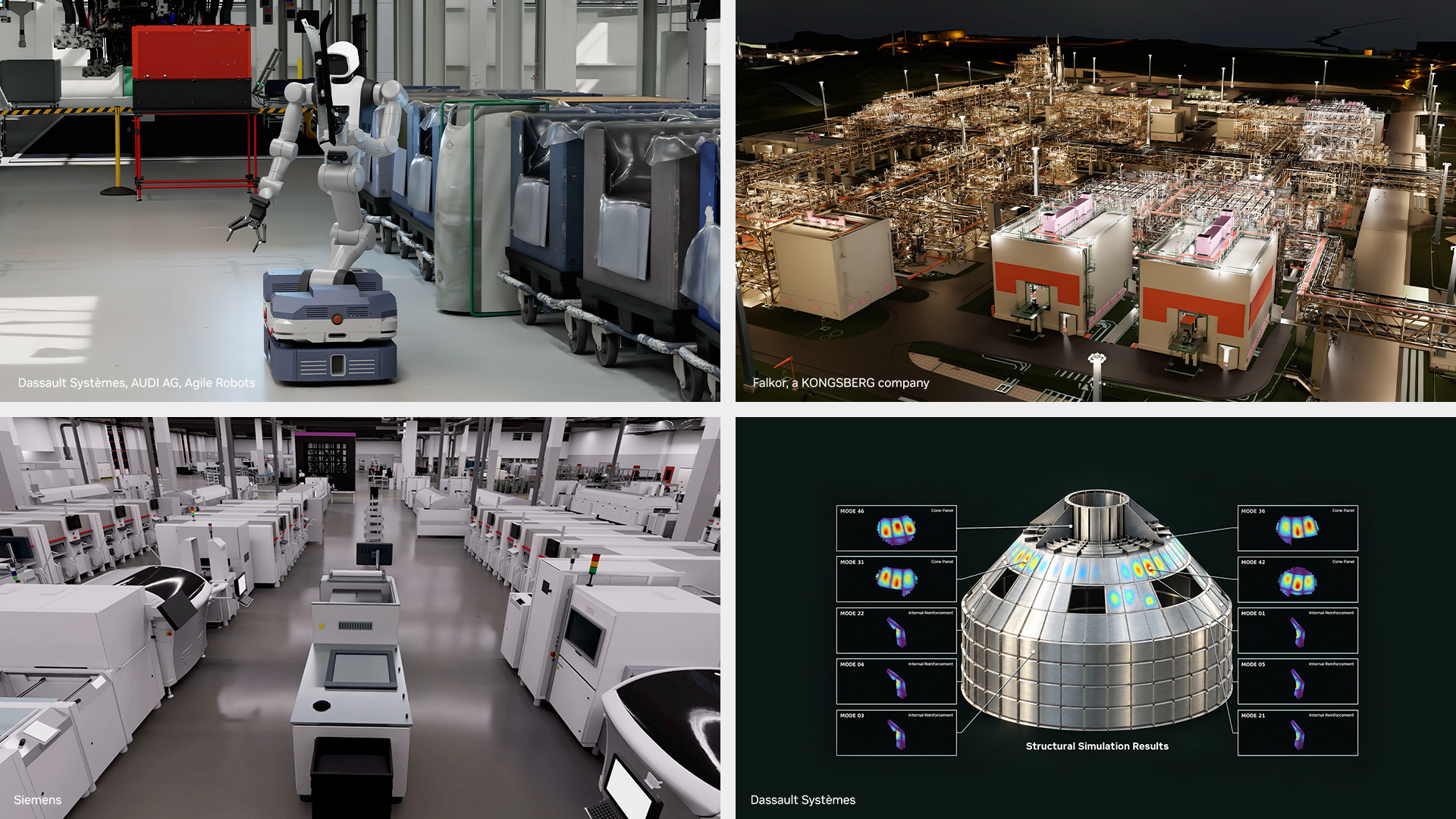
NVIDIA's Berlin roll call of European manufacturers is a sales pitch, but the claimed gains in simulation and inspection are the useful kind of AI worth tracking.
Why it matters
At GTC Berlin, NVIDIA put a long list of European industrial names behind its simulation and agent stack. The headline launch is the Factory Operations Blueprint, called FOX, now in early access on GitHub, a template for always-on factory manager agents that coordinate specialist agents for visual inspection, root-cause analysis, reporting and fleet management.
The customer claims are specific. Siemens says FOX-based agents in its Intelligence Center X carry estimated cost savings of 20%, and that synthetic defect images cut inspection calibration time by 40% at its Erlangen electronics factory. Imec's benchmarks of S-Litho show up to 40x speedups, and Infineon reports a 12x speedup in 3D breakdown simulation for power devices. NVIDIA also made its cuDSS solver library generally available.
From the desk
We like this category of AI. Faster simulation means engineers test more designs before cutting metal. Better visual inspection means fewer bad boards shipped. Physics models that help vessels avoid dangerous waves, as UniversalAGI says it is doing with Saab, are about keeping sailors safe. This is AI aimed at physical work with measurable outputs, and it deserves more attention than another chatbot launch.
But let's be clear about what this is. It is a vendor blog, the numbers are customer or partner claims, and several are framed as estimates or benchmarks rather than audited production results. A 20% estimated saving is a target, not a ledger entry. We would want to see those figures hold up a year into deployment before treating them as the norm.
The strategic story is lock-in. Nearly every example runs through NVIDIA libraries: CUDA-X, Omniverse, Isaac, Warp, Cosmos, Nemotron. Even Mistral, Europe's homegrown model champion, says it plans to use NVIDIA's simulation libraries to generate training data. For a continent that talks constantly about technological sovereignty, its industrial base is choosing one American supplier as the foundation for factory automation. That may be the pragmatic call. It is still a dependency.
The workforce question also sits quietly under the blueprint. Always-on agents that monitor, investigate and coordinate responses are doing work that shift supervisors and quality engineers do today. The likelier near-term outcome is fewer routine tasks, not fewer people, but that depends on choices companies have not announced.
I'm watching whether FOX moves from early access to real deployments outside Siemens, and whether any of these manufacturers publish results independent of the vendor.
Context
Digital twins and GPU-accelerated simulation have been NVIDIA's industrial pitch for years; the shift here is adding agent layers on top that act on what the simulations and cameras see. The same twin approach is being applied to AI data centers themselves, with Schneider Electric and AVEVA building one for Nscale.
Who feels it
- Manufacturers
- There is now a reference template for factory agents, lowering the cost to pilot, and deepening reliance on one hardware and software stack.
- Engineering software vendors
- Siemens, Dassault, Autodesk, Cadence and Synopsys are all wiring their tools to NVIDIA acceleration; differentiation shifts to workflow and data.
- Factory workers and engineers
- Inspection, calibration and root-cause work are the first targets for automation.
- European policymakers
- Industrial AI progress is real but runs on a non-European stack, complicating sovereignty goals.
What to watch
- FOX adoption beyond Siemens and its move out of early access
- Independent or audited results backing the 20% and 40% claims
- Whether Mistral's planned use of NVIDIA simulation tools produces engineering-specific models
- European responses on dependency in industrial AI
Companies: NVIDIA