From Enablement to Execution, Egypt’s AI Ecosystem Reaches Production Scale
Sep 21, 2026, 9:00 AM · NVIDIA Blog
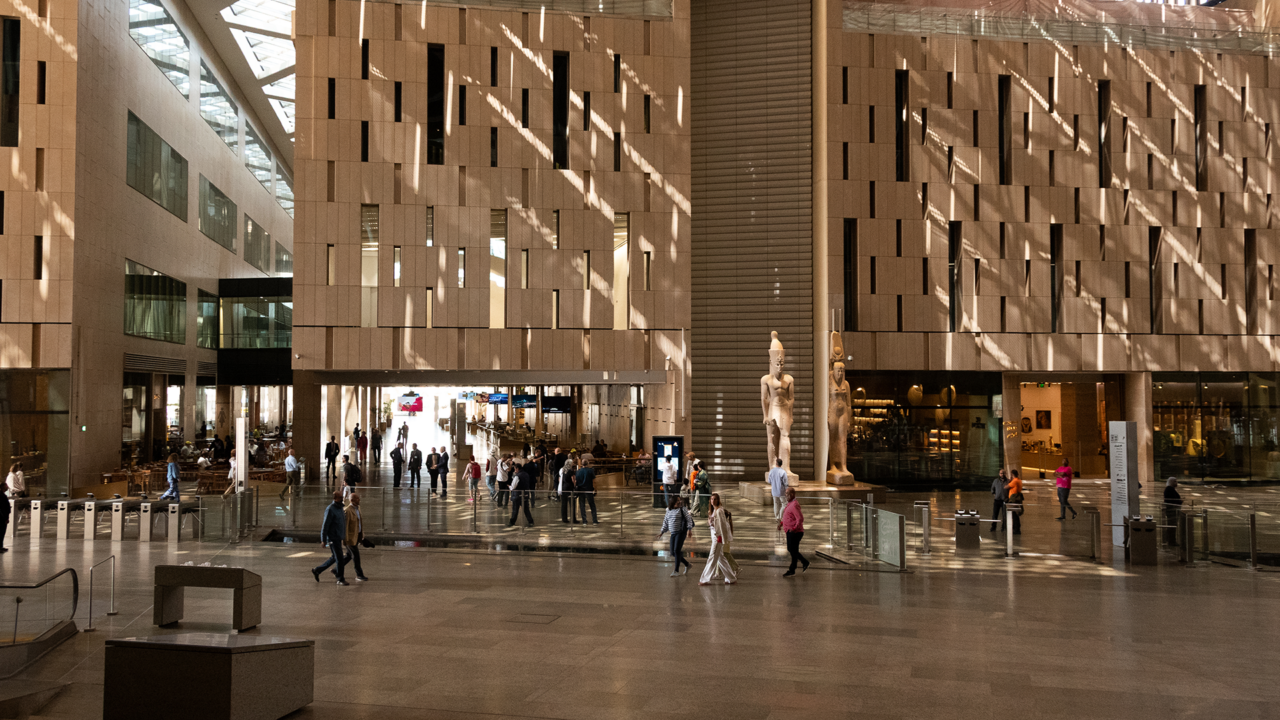
Egypt’s AI story is shifting from potential slides to onshore AI factories — and NVIDIA is writing itself into the ribbon-cutting.
Why it matters
Africa holds roughly 18% of the world’s population and less than 1% of data-center capacity. For years, serious training meant shipping work to clouds abroad. That constraint is starting to crack.
Within a year, four AI factories have been announced or brought online across Africa, with hundreds of megawatts more in the pipeline. Egypt is hosting ecosystem events and licensing new data-center builds while startups in speech, robotics, and biotech plug into NVIDIA’s Inception and VC programs.
From the desk
We’re glad to see the pitch change from “Africa’s AI potential” to “Africa’s AI production.” Onshore accelerated compute is how local language models, health tools, and enterprise agents stop being demos that die at the latency and data-residency wall.
NVIDIA’s blog leans promotional — Grand Egyptian Museum reception, Deep Learning Institute learner growth, Inception startups from Intella to Proteinea — but the infrastructure numbers are the real signal. Cassava Technologies is expanding as Africa’s first NVIDIA Cloud Partner, with a South Africa AI factory and planned sites including Egypt. Stratos Lab is pairing with partners on HGX B300 systems. Morocco’s Nexus AI factory was framed as a billion-dollar-class initial investment with Blackwell and renewable power.
Useful AI here looks like Arabic speech intelligence, African language models such as Lelapa’s InkubaLM work, and developer capacity: NVIDIA says it has trained over 85,000 developers across Africa toward a 100,000 target, with Nigeria now its second-largest Deep Learning Institute market globally.
Eyes open: most of this still runs through one chip vendor’s cloud-partner and Inception funnel. That can accelerate capability and concentrate dependency. McKinsey’s cited demand jump toward 1.5–2.2 gigawatts by 2030 implies tens of billions in construction — energy, water, and governance fights will follow the GPUs.
Our take is cautiously bullish. Local compute plus local talent is the right sequence. I’m watching whether Egyptian and African founders keep IP and data in-country as capacity comes online — or whether “AI factory” mostly means inference for foreign models.
Context
NVIDIA blog by Fatima Tambajang, Sep 21, 2026, covering an Egypt ecosystem event and AI factory announcements across South Africa, Morocco, Nigeria, and Egypt.
Who feels it
- African developers and startups
- Lower-latency, in-country GPU access becomes more realistic for training and agentic workloads.
- Enterprises and governments
- GPU-as-a-service and data-residency options support regulated workloads that could not leave the continent.
- Investors
- VC Alliance expansion and local funds like A15 signal a denser path from prototype to production capital.
- Energy and infrastructure planners
- Multi-hundred-megawatt AI factory plans will force hard choices on power, cooling, and public cost.
What to watch
- Hassan Allam / A15 data-center build milestones after the NTRA license.
- Cassava–Vodafone Egypt AI factory go-live and actual utilization by local builders.
- Whether African-language and Arabic speech models gain production customers, not only demos.
- McKinsey-scale demand translating into financed megawatts versus press-release megawatts.
Companies: NVIDIA