From Scan to Treatment Plan, AI Helps Close Breast Cancer’s Deadliest Gaps
Oct 5, 2026, 6:00 AM · NVIDIA Blog
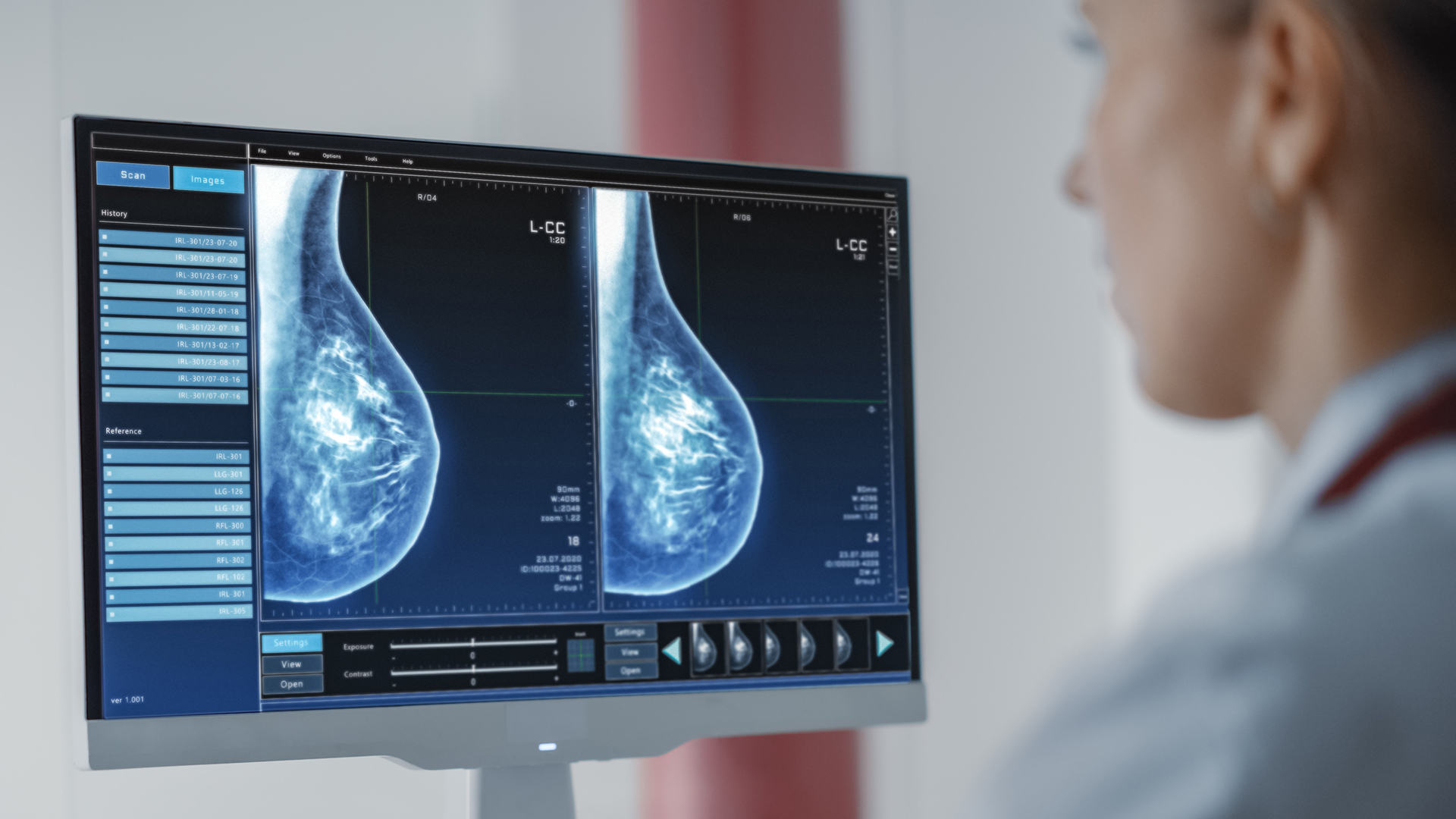
NVIDIA is showcasing startups using AI at every step of breast cancer care, from two-minute wearable ultrasound to pathology-based treatment predictions — promising, but it’s a vendor’s highlight reel, not a trial readout.
Why it matters
Breast cancer is the most commonly diagnosed cancer among American women, and NVIDIA’s blog lays out where care breaks down: a majority of women over 40 skip the recommended annual screening, about 40 million US mammograms a year face a projected shortfall of tens of thousands of radiologists over the next decade, and genomic tests that guide treatment can take weeks.
The post profiles four companies in the NVIDIA Inception startup program working on those gaps — iSono Health, Whiterabbit.ai, Ataraxis AI and SimBioSys. Some of their tools are FDA-cleared or in clinical use; the post also notes certain technologies described are investigational and not FDA-approved for commercial use. That mix is exactly why this deserves attention and a careful read.
From the desk
We’re genuinely for this kind of AI. Screening access, radiologist workload and slow treatment decisions are real bottlenecks where faster, more consistent tools can save lives. This is the useful version of the technology, and we want more of it.
The most interesting idea in the post is consistency, not raw accuracy. iSono Health’s FDA-cleared ATUSA system is a wearable, automated 3D ultrasound that the company says captures each breast in about two minutes, compared with up to 45 minutes for a conventional handheld scan. Because it images the breast the same way every time, scans can be compared year over year — something operator-dependent handheld ultrasound struggles with. The company also claims its 3D scan is 28% more sensitive than handheld 2D ultrasound. That’s a company figure, and its 3,200-patient multicenter study with UC Davis and Vanderbilt is where it will be tested.
Whiterabbit.ai’s framing is the right one for radiology: its CTO describes the job as finding roughly one cancer in every 200 mammograms, and pitches AI as a sidekick that clears the hay. Its FDA-cleared WRDensity tool assesses breast density, and it is researching AI that could automate reads of negative mammograms. That last part is where I’d slow down. Automating negatives is how you relieve a strained workforce — and it’s also where a missed cancer has nobody looking twice. The bar for that should be very high and very public.
Ataraxis AI says its pathology-slide models, which predict chemotherapy response and five-year recurrence risk, are validated across more than 10 institutions and multiple trials and are in active clinical use. Skipping a separate biopsy and a two-to-four-week wait would matter enormously to patients. SimBioSys builds 3D tumor models from MRI, pathology and clinical data to guide surgery and estimate recurrence risk.
Our caution is about the source and the scale. This is NVIDIA promoting its own ecosystem and hardware, so performance numbers are company claims, not independent results. If these tools spread faster than the evidence, the downside is uneven: bias in training data, overreliance by overloaded clinicians, and access gaps between clinics that can afford the stack and those that can’t.
Context
The post coincides with Breast Cancer Awareness Month. SimBioSys CEO Stacey Stevens spoke on an October 1 panel in Phoenix with NVIDIA’s healthcare AI startups lead, Chelsea Sumner, who also wrote the post. ATUSA is available through partner clinics in California, Texas, Georgia, Tennessee and Washington, D.C.
Who feels it
- Patients
- Faster scans closer to home and quicker treatment guidance could narrow dangerous delays, if validation holds.
- Radiologists and oncologists
- Tools pitched as relief for workload shortages also shift responsibility; clinicians will need clarity on what the AI decided and why.
- Health systems
- Adoption brings GPU infrastructure, integration and liability questions alongside potential cost savings.
What to watch
- Results from iSono Health’s 3,200-patient multicenter study
- Any FDA submission for AI that automates negative mammogram reads
- Independent, peer-reviewed validation of treatment-response and recurrence models