How NVIDIA Open Source Tools Are Helping Researchers Build Next-Generation 6G Networks
Nov 6, 2026, 8:00 AM · NVIDIA Blog
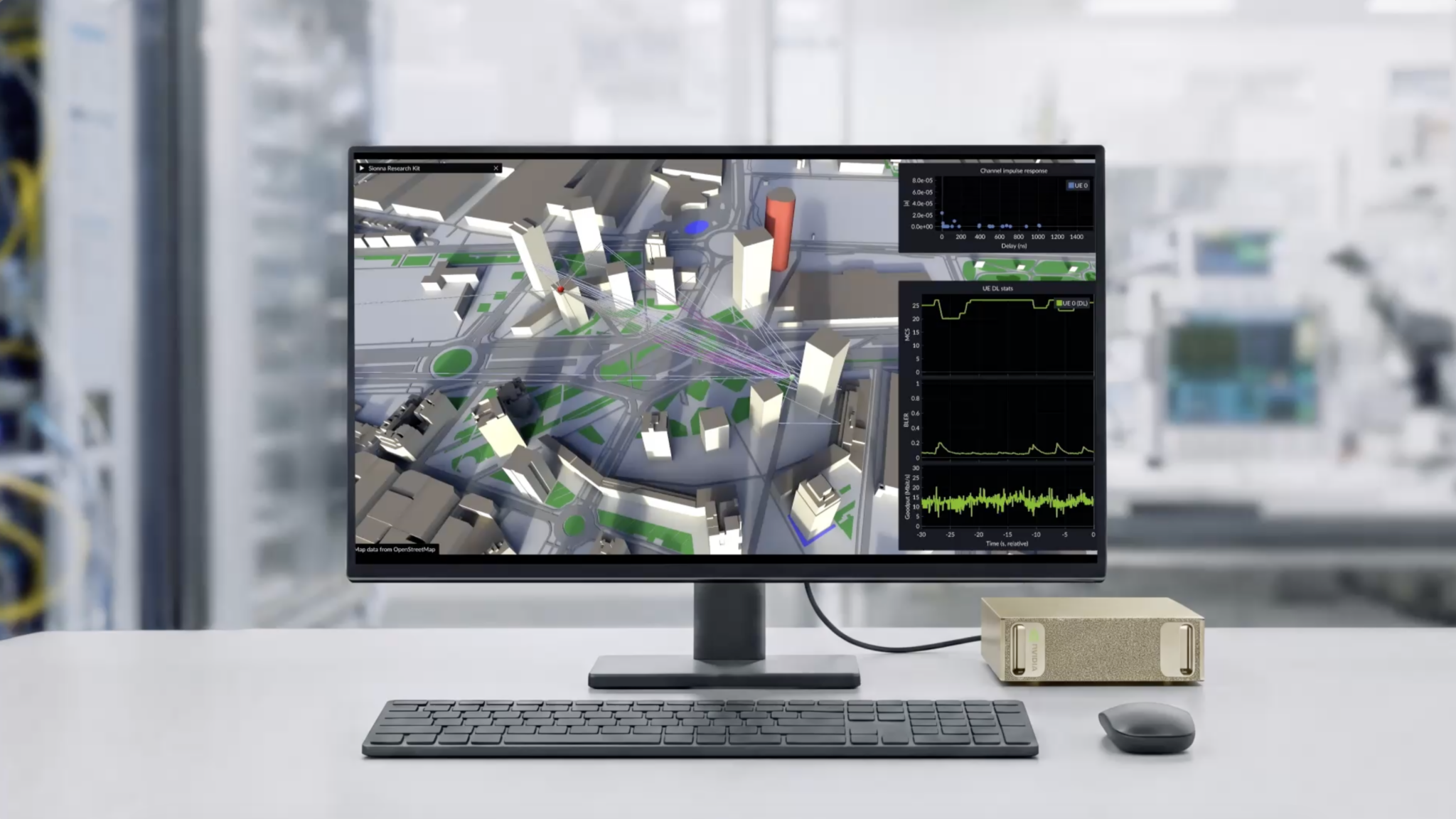
A year after open-sourcing Aerial alongside Sionna, NVIDIA says its 5G/6G stack has crossed a million downloads — and researchers are already using it to cut robot latency, boost receivers, and sleep idle base stations.
Why it matters
NVIDIA reports that global developer adoption of AI Aerial and Sionna has grown 10× over the past year, with open-source 5G/6G tools past one million downloads and more than 8,000 research and academic institutions using the platforms. The pitch is AI-native 6G: connectivity, computing, and sensing on a software-defined stack — not just faster pipes.
The blog showcases concrete lab results: King's College London cut robot task time by up to 52.6% with goal-oriented semantic communications; SoftBank's neural receiver beat a conventional receiver at all 15 tested interference settings, peaking near 60% uplink gain; Leeds reported a 45.6% drop in RAN power versus a full-power baseline while keeping devices connected.
Wireless research finally has a shared, GPU-accelerated path from simulation to over-the-air experiments — and that matters before 6G standards harden.
From the desk
We're watching the research layer of the telco story, not another SKU announcement. Open tools only matter if labs can reproduce each other's work. Aerial plus Sionna plus the Aerial Testbed and CUDA-Accelerated RAN give that shared substrate: simulate, train, then run over the air.
The King's College work is the clearest "useful AI" case here. Instead of streaming full camera frames, a Jetson-powered arm sends compact object descriptions so the wireless hop stops dominating reaction time. SoftBank and ETH Zurich show the other side — neural receivers that learn the channel and the local environment, cutting errors when interference would otherwise force retransmissions. Leeds' demand-forecast sleep controller is the power story: 6G will drown in devices unless capacity can go dark safely.
CTTC's GPU-accelerated channel models collapsing multi-hour 5G-LENA runs into roughly 10–20 minutes is the quiet multiplier. Faster sims mean more designs get stress-tested before anyone buys field gear.
I want open wireless stacks because closed RAN research locks too much of the future inside vendor NDAs. The downside if these demos stay lab-bound: operators inherit AI receivers and sleep policies without independent failure modes, and "AI-native 6G" becomes a conference slogan. Publish the harnesses. Keep the GitHub repos honest. Scale only what survives messy air.
Context
NVIDIA open-sourced Aerial about a year before this November 6, 2026 post. The company points researchers to GTC Washington, D.C. 6G developer sessions and to AI Aerial and Sionna on GitHub.
Who feels it
- Academic and industry wireless researchers
- A common open stack for comparing semantic comms, neural receivers, and energy controllers with real OTA paths.
- Robotics and edge AI teams
- Evidence that shrinking what crosses the radio can cut task time as much as smarter onboard models.
- Mobile network operators
- Early playbooks for AI-guided capacity sleep and neural uplink reception — still early for production claims.
- Standards and simulation communities
- GPU-accelerated channel models that compress multi-hour sims into tens of minutes.
What to watch
- Independent reproductions of SoftBank's neural-receiver gains outside controlled interference tests.
- Whether Leeds-style sleep controllers hold connectivity under live traffic, not just network-in-a-box demos.
- Broader adoption of Aerial/Sionna beyond the cited 8,000 institutions.
- What researchers show at GTC Washington, D.C. 6G sessions that graduates from lab to field trial.
Companies: NVIDIA