AI · Oct 28, 2026
RTX Spark laptops get open speech models and a dial for background agentsInside Nvidia's supply machine: weekly chip rationing, a five-to-two-week sprint and 3 a.m. phone calls
· Updated · Signal Desk newsroom
Analysis of reporting by NVIDIA Blog. How we work
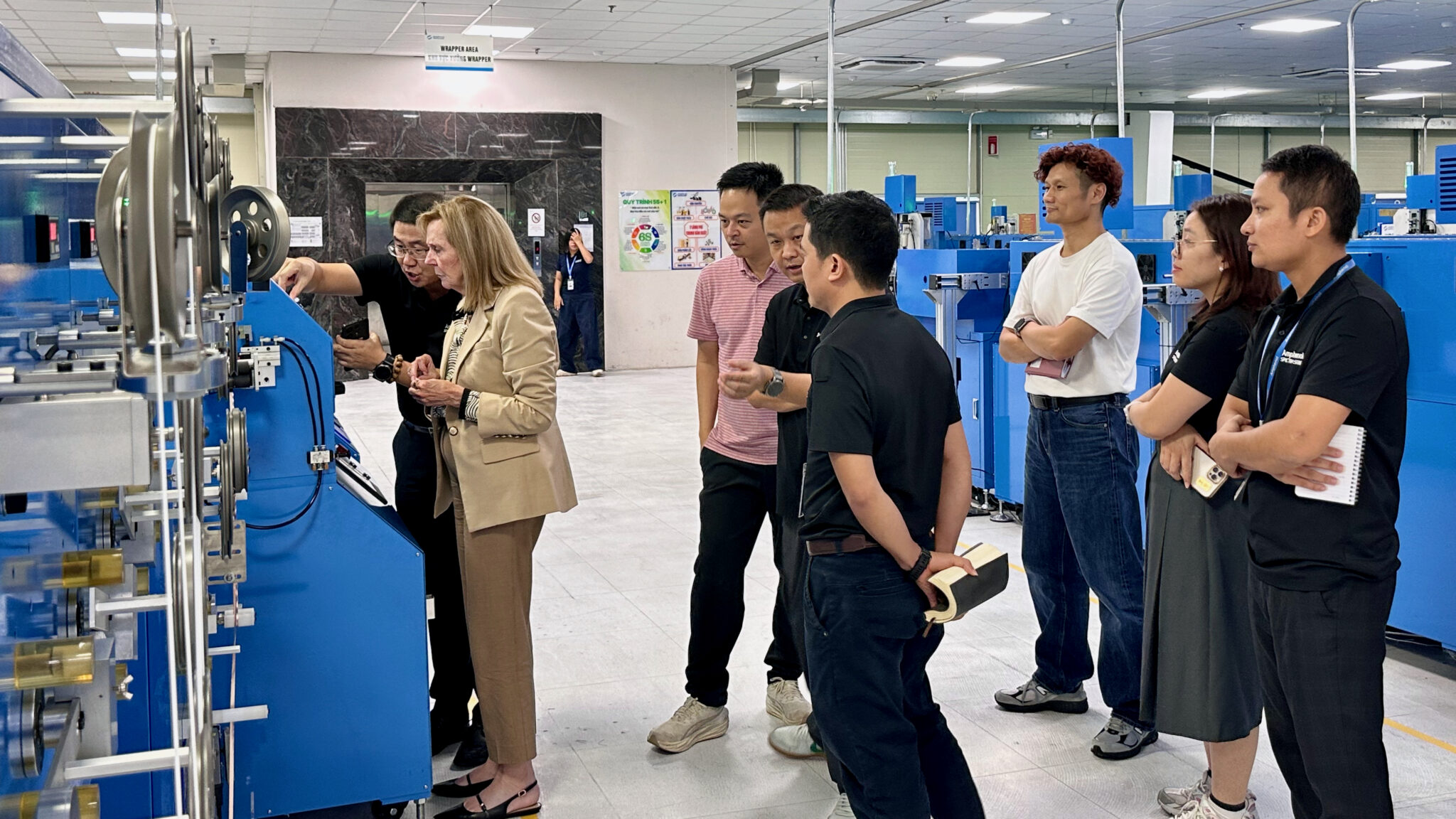
A profile of operations chief Deb Shoquist shows how Nvidia turns designs into racks: tracking every die, rewarding high-yield factories and investing in suppliers that lack scale. It is a company-told story, and a revealing one.
Key takeaways
- Deb Shoquist runs Nvidia's operations, supply chain and manufacturing, working with partners including TSMC, Foxconn, Wistron, SPIL, KYEC, Unimicron, Lumentum, Coherent and Amkor.
- Each week Nvidia decides which factory gets which TSMC chip; low-yield factories get fewer chips.
- Every chip is tracked from die ID to customer invoice, which Nvidia says helped cut the time from chip-out at TSMC to system-out at Foxconn and Wistron from five weeks to two.
- Where optics suppliers lacked scale or capital, Nvidia invested, citing Coherent and Lumentum, and it is building new supply chains for co-packaged optics.
- A GB200 compute-board test line fell short at ramp and was rescued by a cross-company engineering swarm.
The least glamorous competitive advantage
Most coverage of Nvidia focuses on chip design and software. This Nvidia blog profile, pegged to Deb Shoquist receiving the 2026 Dr. Lisa Su Woman of Innovation Award, makes the case that the company's real edge also lies in operations. Shoquist oversees the supply chain and manufacturing behind Nvidia's AI platforms, with partners that include TSMC, Foxconn, Wistron, SPIL, King Yuan Electronics, Unimicron, Lumentum, Coherent and Amkor. TSMC has worked with Nvidia since 1998.
It is a company-produced Q&A, so it is warm by design. But it contains specifics about how Nvidia manages scarcity that are more revealing than the usual executive portrait, especially at a time of intense scrutiny of Nvidia after the leadership turmoil we have covered in our Nvidia coverage.
Rationing as management
The sharpest detail is how Nvidia allocates its most constrained input. Shoquist says the critical component is the TSMC chip, and every week, as chips come out of assembly, Nvidia decides which factory gets what. If a factory's yield is low or its time of ownership falls short, it gets fewer chips that week. That is a powerful lever over suppliers, and it shows how much bargaining power Nvidia holds in its ecosystem.
Traceability backs it up. Nvidia says it tracks every chip from the die's identification number to the customer invoice, and suppliers must support that process. With it, Nvidia says, it has shortened the time from chip-out at TSMC to system-out at Foxconn and Wistron from five weeks to two when supply and demand require. Shoquist describes her job as matchmaking: finding partners that are financially strong, highly technical and willing to do something never done before. When a partner has only two of those three legs, Nvidia may invest to make it work, as it did with optics suppliers Coherent and Lumentum.
New supply chains, and when lines break
The shift from chips to full data center systems has forced Nvidia into areas where suppliers lack scale, Shoquist says, and products such as co-packaged optics require building entirely new supply chains with partners new to optics. One example of complexity: Amphenol's cable cartridge, with 1,500 small cable legs assembled to below one defect per million, built on more than a hundred automated lines in Vietnam.
She is also candid about a stumble. As Foxconn and Wistron prepared for volume production of the GB200 compute board, a new automated test handler ran far below planned throughput. An operations director switched back to manual loading with hundreds of operators to protect shipments, while Nvidia and Foxconn engineers swarmed the line to redesign it. It is a good story, told by the winner; the post does not quantify delays or costs. Readers can pair it with our look at codifying supply chain expertise with Nemotron and Palantir.
The bigger takeaway is concentration. Nvidia's system depends on deep personal relationships, a handful of Taiwanese and Asian manufacturers, and constant pressure on suppliers. That is efficient in good times. It also means geopolitical shocks, a key partner's failure or the loss of institutional knowledge carry real risk.
Who feels it
- Contract manufacturers
- Weekly chip allocation tied to yield keeps intense pressure on factory performance.
- Optics suppliers
- Nvidia investment can fund scale-up but deepens dependence on one customer.
- AI infrastructure buyers
- Faster chip-to-system times can shorten delivery when demand spikes.
- Policymakers
- The profile underlines how concentrated AI hardware production is in Asia.
What to watch
- Volume ramps for co-packaged optics and the new supply chains behind them.
- Further Nvidia investments in suppliers that lack capital to scale.
- Any disclosure of yield or test problems in upcoming system ramps.
- How geopolitical pressure affects Nvidia's Taiwan, China and Vietnam manufacturing footprint.
FAQ
Who runs Nvidia's supply chain?
Deb Shoquist leads operations at Nvidia, overseeing the supply chain and manufacturing behind its AI platforms.
How does Nvidia allocate chips to factories?
Each week Nvidia decides which factory gets which TSMC chip, and factories with low yield or poor time of ownership get fewer chips that week.
How fast can Nvidia turn a chip into a system?
Nvidia says chip-level traceability helped cut the time from chip-out at TSMC to system-out at Foxconn and Wistron from five weeks to two when needed.
Companies: NVIDIA
More on NVIDIA
AI · Nov 5, 2026
NVIDIA’s four open Cosmos 3 Nano models let robot and driving teams simulate worlds that reactAI · Nov 16, 2026
Rubin HPC is Nvidia’s bet that science agents will be bottlenecked by simulation, not reasoningAI · Nov 9, 2026
Nvidia’s Korean startup bets span interconnect, open models, robot hands and document AIAI · Nov 8, 2026
Nvidia’s Dynamo recipes speed four Korean open models to production, tuned for B200s