NVIDIA and Local AI Community Fuel Open Source Models and Intelligent Agents
Aug 11, 2026, 6:00 AM · NVIDIA Blog
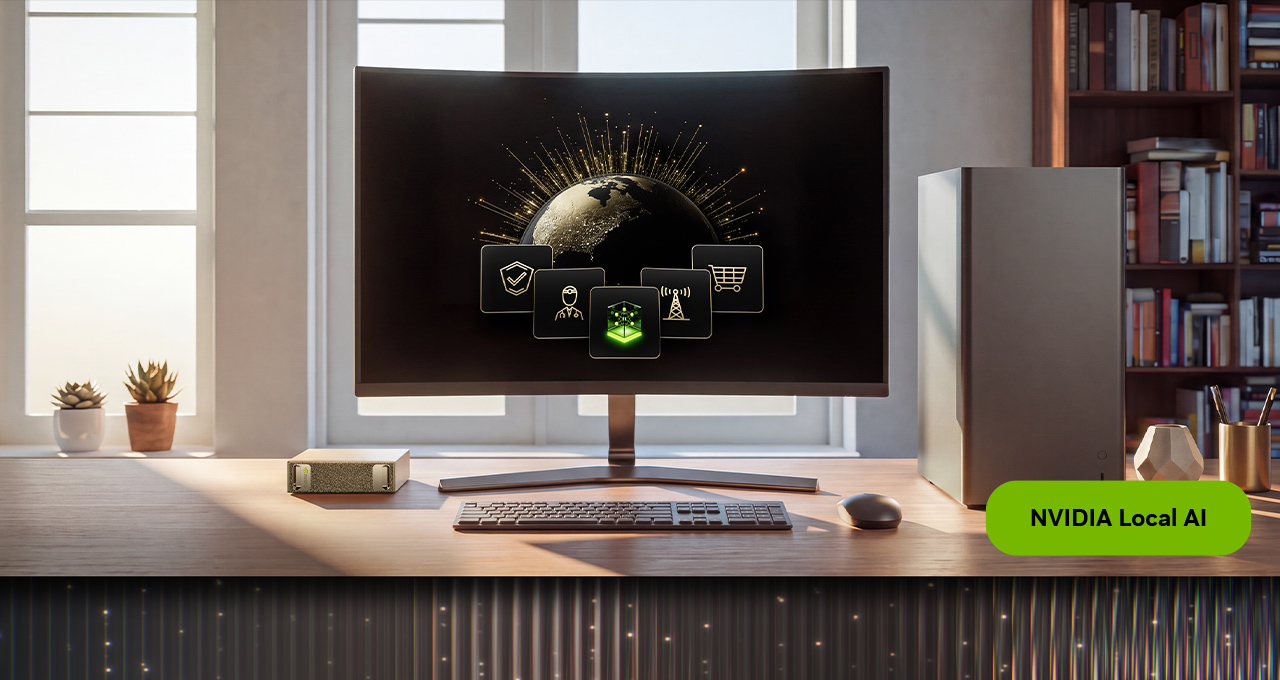
Local AI is becoming a hardware ecosystem rather than a single-model story, with privacy and always-on agents used to justify increasingly expensive desktop compute.
Why it matters
NVIDIA’s August local-AI roundup spans coding, video, multimodal and agent models across RTX PCs, DGX Spark, DGX Station and Jetson. It reports Qwen3.8-27B at 131 tokens per second on a GeForce RTX 5090 and Meta’s 30-billion-parameter Muse Glimmer above 200 tokens per second on the same GPU.
The post also highlights Perplexity’s Portable Computer agent for DGX Spark, clustering through the NVIDIA Sync Cluster Assistant, and a series of open-weight releases sized or quantized for local devices. The recurring pitch is that code, documents, messages and credentials stay on-device while agents run continuously without cloud token limits.
Performance figures come from NVIDIA-selected hardware, checkpoints and settings, and several integrations are described as coming soon.
From the desk
The collection shows local AI shifting from hobbyist inference toward persistent application infrastructure. Model runners, agent front ends, clustering and resource monitoring are converging into something that behaves like a private service sitting on a desk.
Signal Desk's read: privacy is the strongest adoption argument, but convenience will decide whether local agents stick. Keeping files on-device only matters if setup, updates, permissions and failure recovery beat a cloud subscription. NVIDIA is assembling those surrounding tools precisely because raw tokens per second no longer differentiates the platform.
This is a vendor-authored NVIDIA roundup promoting models and applications optimized for NVIDIA hardware. Its benchmarks and partner descriptions are vendor-reported, with cross-platform comparisons, energy use and independent quality testing largely absent; open weights also do not imply open development.
The breadth is strategically convenient: every new local model becomes another reason to buy memory-rich GPU systems. For developers, the real contest is whether shared runtimes keep hardware optimization from hardening into platform lock-in.
Context
Smaller dense and mixture-of-experts models, quantization and speculative decoding have made capable local inference practical on high-end consumer and compact workstation hardware, using runtimes such as llama.cpp, Ollama, vLLM and LM Studio.
Local deployment also changes the threat model rather than eliminating it. Agents that can read files, operate applications or use credentials need strong sandboxing and audit trails whether inference happens in a cloud region or on a workstation.
Who feels it
- Developers
- More capable models can run beside private code and tools, though benchmark settings and runtime support need verification.
- Enterprises
- On-premises agents may reduce data exposure and usage fees while creating device-management and security obligations.
- Hardware buyers
- Memory capacity, idle power and software support may matter more than peak benchmark speed for always-on use.
What to watch
- Independent tests of quality, power draw and sustained throughput on local systems
- Delivery of promised Windows, RTX PRO and broader device support
- Whether shared runtimes preserve portability across GPU vendors
Companies: NVIDIA