Physical AI Takes the Wheel: How the World’s Robotaxi Leaders Are Building With NVIDIA Technologies
Sep 10, 2026, 9:00 AM · NVIDIA Blog
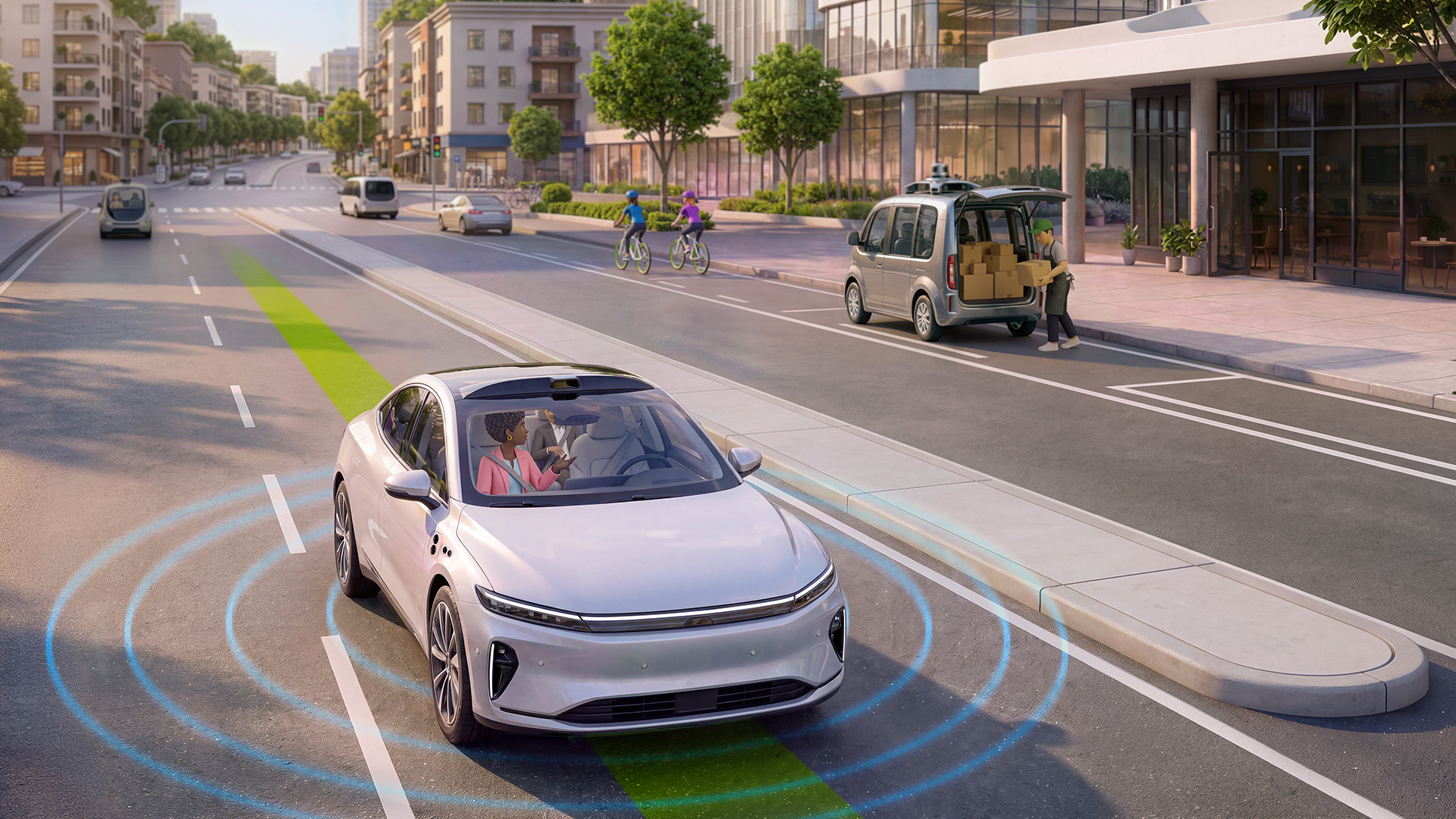
NVIDIA’s three-computer robotaxi stack — train, simulate, drive — is becoming the shared backplane for almost every commercial-scale autonomous fleet program it names.
Why it matters
NVIDIA’s blog frames robotaxis as physical AI’s first commercial breakthrough and projects a $400 billion global market by 2035 with over 6 million commercial vehicles in operation. The harder claim is closer to home: every major robotaxi program operating at commercial scale today, in NVIDIA’s telling, is running on some combination of its modular stack for AI training, simulation, and in-vehicle computing.
That stack is a three-computer design — DGX for training, Omniverse and Cosmos on RTX PRO for simulation and validation, and DRIVE Hyperion with dual DRIVE AGX Thor for the car. The pitch is open and modular: libraries, SDKs, workflows, and models that sit beside a developer’s own stack rather than replacing it wholesale.
From the desk
We’re watching NVIDIA try to own the robotaxi lifecycle the way it owns the training cluster. Scaling a fleet is not the same problem as shipping a demo car. Thousands of vehicles need the same safety case, and that means compute in the cloud, in the sim loop, and in the cabin. DRIVE Hyperion 10 pairs dual Thor SoCs on Blackwell with a dense sensor suite — 14 cameras, nine radars, three lidars, 12 ultrasonics — and a redundant design meant to stay fail-operational if a sensor or compute path drops.
The partner list is the argument. Uber plans to scale NVIDIA DRIVE Hyperion fleets toward 28 cities by 2028 and is building a robotaxi AI data factory on Cosmos with a long roster of AV partners. Waymo partners with NVIDIA on autonomous computing. Zoox, Pony.ai, Momenta, Waabi, WeRide, May Mobility, Autobrains, Tensor, DeepRoute.ai, TIER IV, Lenovo, Mercedes-Benz, Stellantis, Lucid, Hyundai/Kia, Geely, and Zeekr all appear in some combination of training, simulation, or in-vehicle roles. Tesla is noted for training on NVIDIA supercomputers.
Our read: this is useful infrastructure if the open-platform claim stays real — Alpamayo VLA models, NuRec reconstruction, Cosmos variation, Halos safety — and not just a press-release census. NVIDIA cites a 43% drop in minimum average displacement error on a challenging AV eval when meta-action and chain-of-thought reasoning data were added to a VLA model, from 2.08 to 1.18. That’s one metric on one eval; we’re not extrapolating fleet safety from it. The downside if this stack becomes unavoidable is concentration: one vendor’s sim, one vendor’s in-vehicle SoC, one vendor’s safety OS under most commercial robotaxi programs. I’m watching whether regulators treat that as a shared safety asset or a single point of failure.
Context
NVIDIA positions Halos as a production-ready safety foundation — Halos OS plus validation and certification spanning inspection, system validation, large-scale simulation, and continuous testing from cloud to car. Alpamayo supplies open reasoning VLA models, simulation frameworks, and physical AI datasets aimed at long-tail driving.
Who feels it
- AV developers
- The three-computer split clarifies buy vs build. Training and sim on NVIDIA is already common; Hyperion as the in-vehicle reference is the distribution fight.
- Ride-hail platforms
- Uber’s multi-partner Hyperion plan and Lyft’s Hyperion reference interest show platforms want a common vehicle compute layer even when software stacks differ.
- Regulators and insurers
- A shared NVIDIA safety and sim path across fleets could standardize evidence — or create correlated failure modes across brands.
What to watch
- Whether Uber’s path to 28 cities by 2028 names which partners are actually carrying paying riders on Hyperion hardware.
- Independent safety cases that cite Halos validation rather than only NVIDIA marketing.
- How far Alpamayo open models move from research evals into production robotaxi stacks.
Companies: NVIDIA