Practice Makes Precise: At CoRL, NVIDIA and Partners Reveal How Robots Rehearse Delicate Work in Simulation
Nov 9, 2026, 6:00 AM · NVIDIA Blog
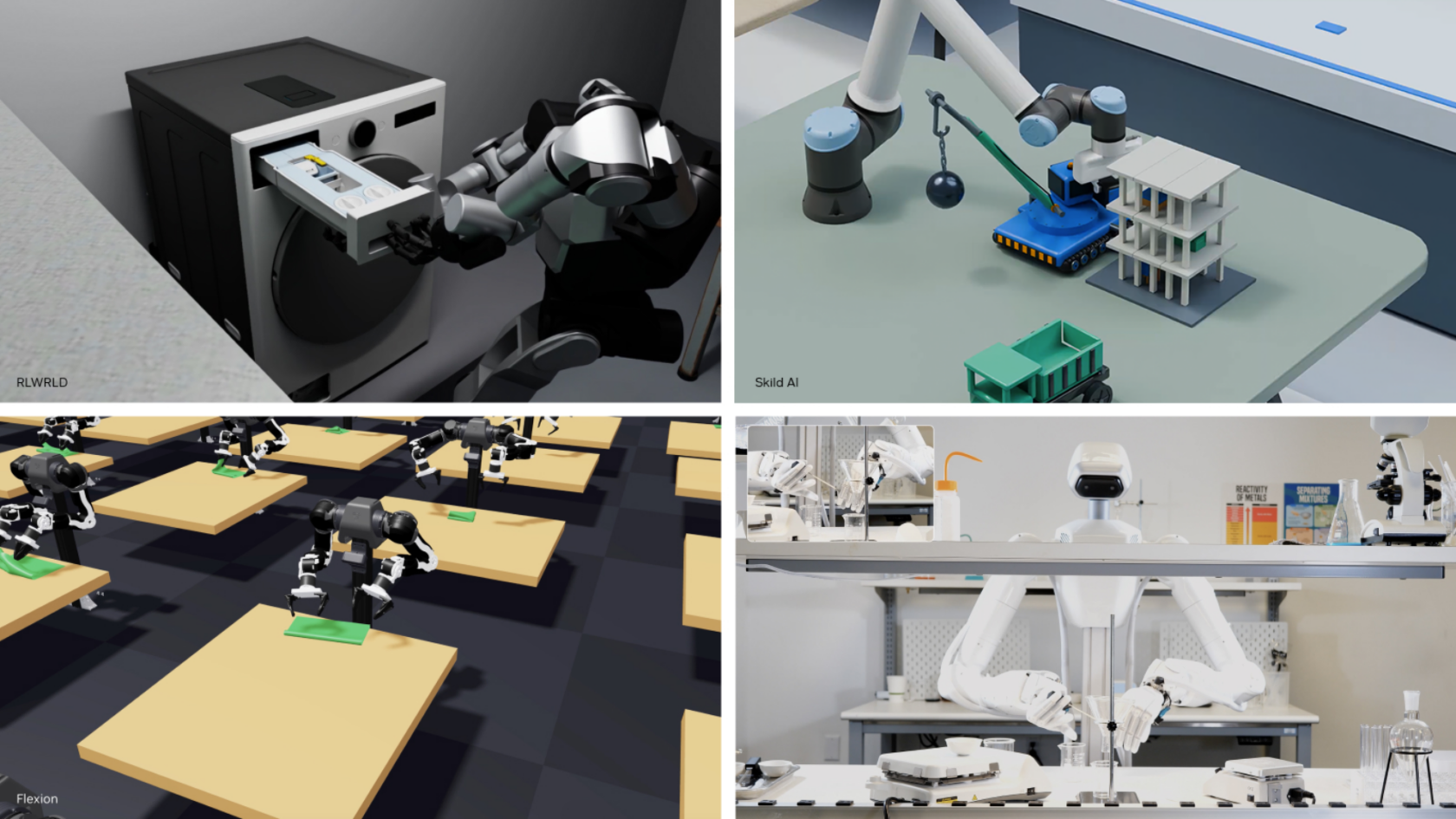
Nvidia is pushing robot learning from walking to fiddly hand work, betting simulation and agents can teach cable swaps and gear alignment before a real arm touches a part.
Why it matters
At the Conference on Robot Learning in Austin, Nvidia announced GR00T 2, an open world action model built on Cosmos, plus Isaac Lab 3.0, an updated evaluation framework, and new open benchmarks with partners. The headline claim is about precision: robots practicing delicate tasks like connecting cables and assembling small components in simulation, then carrying those skills into real hardware.
The company's own numbers for GR00T 2 include completing 40 of 50 evaluated tasks at least once with no task-specific demonstrations, and 71% average success across 50 tasks from a single demonstration each, rising to 95% with five. Foxconn, Siemens, and Nexuni are named as testing or evaluating it. If those results hold outside a vendor blog, the cost of teaching a robot a new industrial job drops sharply.
From the desk
This is a vendor announcement, so we read the benchmarks as claims, not verdicts. Still, the direction is the right one. Locomotion demos are impressive, but factories and warehouses pay for hands that can do small, boring, exact things all day. Moving the research spotlight to manipulation is where the economic value is.
Two pieces stand out to me. First, AlphaNIST: a single policy trained in Isaac Lab to handle all 20 tasks on the NIST Assembly Task Board using only a pass-or-fail signal, reported at over 98% training success versus 81% for separate per-task policies, with roughly 39 times less GPU time. The trick behind it, a University of Washington and Nvidia method that focuses practice on tasks the policy succeeds at about half the time, is the kind of idea that tends to travel. Second, the evaluation push. Isaac Lab-Arena, DexBench, and VABAR are about measuring failure across thousands of variations, which is what you need before anyone should trust a robot near people or expensive equipment.
The agentic angle is the part to watch with care. Berkeley's Graph-as-Policy has agents stitch skills into robot programs, test them in simulation, and revise based on failures, while keeping the output readable for engineers. Interpretable code is a real safety benefit. But agents writing programs for physical machines means a bad plan has physical consequences, and simulation never captures everything a real shop floor throws at a robot.
The downside at scale is twofold. Workers doing precise assembly and handling jobs are the obvious exposure if this matures. And the whole stack, from model to physics engine to benchmarks, increasingly runs through one company's tools, even when they are open source. I'm watching whether independent labs reproduce these gains on hardware Nvidia doesn't showcase.
Context
Two Nvidia papers, GRAIL and RoboTTT, are among six Best Paper finalists at CoRL, according to the company. Isaac Lab 3.0 integrates more tightly with the open source Newton physics engine to model deformable objects like cables and cloth; Nvidia says it reached up to 2.5 times the training throughput of Isaac Lab 2.3 with PhysX on one vision-based dexterity benchmark.
Who feels it
- Robotics researchers
- Open models, simulators, and benchmarks lower the cost of experimenting with dexterous manipulation, though much of the tooling is centered on Nvidia's ecosystem.
- Manufacturers
- Few-demonstration learning and simulation-first training could shorten the time to deploy robots on new tasks; real-world reliability is still the open question.
- Workers
- Precision assembly, cable handling, and sorting are exactly the tasks being targeted, so exposure grows as these systems mature.
- Developers
- Agent-driven workflows that produce interpretable robot programs open the field to software teams, with new responsibility for reviewing code that moves physical hardware.
What to watch
- Independent reproductions of GR00T 2's few-demonstration results on non-Nvidia showcase hardware
- Production deployments from Foxconn, Siemens, or Nexuni beyond testing and evaluation
- Adoption of DexBench and VABAR as shared standards across labs
- CoRL Best Paper results for GRAIL and RoboTTT
Companies: NVIDIA