
AIJul 28, 2026Google AI Blog
Gemini API Managed Agents: 3.6 Flash, hooks, and more
Managed Agents are becoming a sandboxed worker with policy hooks and budgets, not just a one-shot coding call.
Desk
Google, DeepMind, and Gemini developments.
Managed Agents are becoming a sandboxed worker with policy hooks and budgets, not just a one-shot coding call.

Gemini Robotics 2’s claim is embodiment transfer: one intelligence layer for walking, two-handed work and on-device adaptation to new robot bodies.

Google is using dinner-party planning to show that Search’s AI Mode is becoming a visual, app-connected assistant rather than a list of links.

Google is positioning AI Mode as an offline-life planner, using calendar, shopping and ticket actions to justify more personal context in Search.

Google’s Genesis pledge is an in-kind compute and model package for DOE labs, not a cash grant, and its value will be measured in lab workflows rather than the headline figure.

Google is splitting the Flash line into a cheaper workhorse, a high-throughput Lite model and a restricted cyber specialist rather than shipping one general upgrade.

Flash Cyber is Google’s bet that cheap, repeatable vulnerability search beats a single expensive model call, and it is being withheld from general developers for that reason.
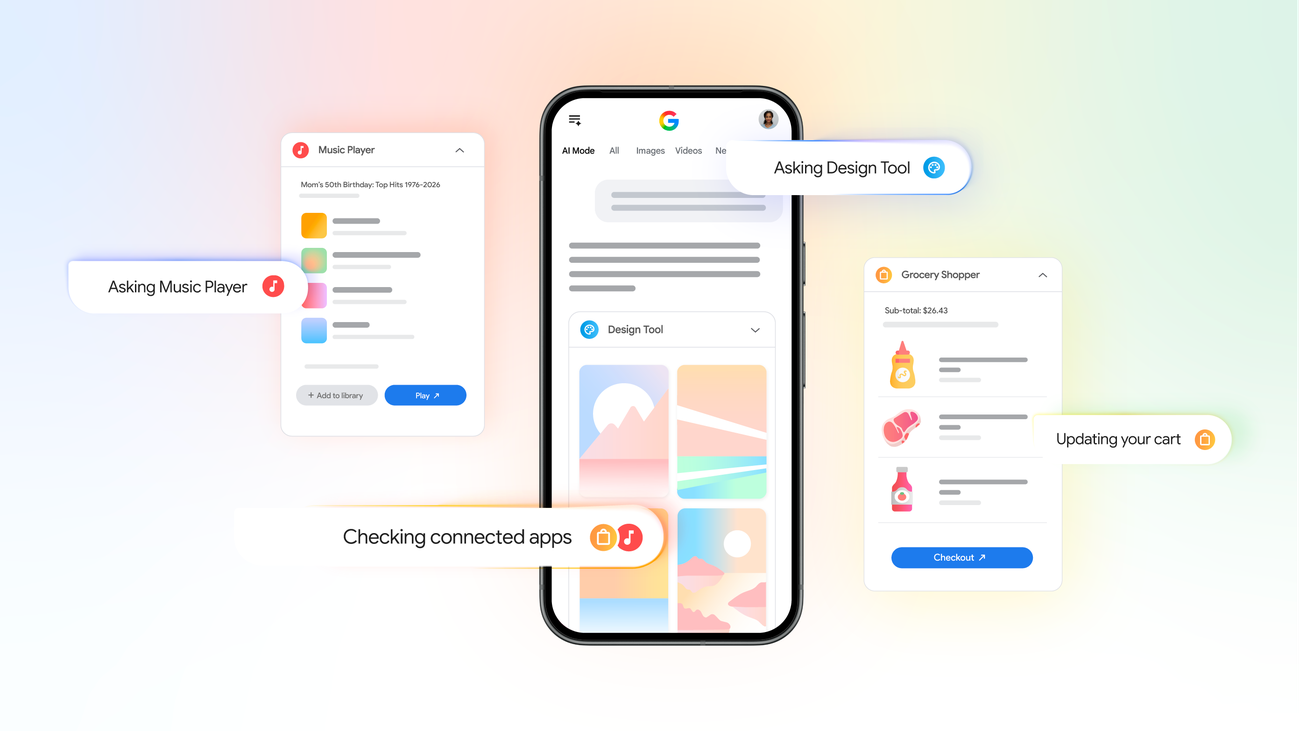
Search is becoming an action bus for Instacart, Canva and YouTube Music, which matters more as a distribution fight than as a convenience feature.

Google Vids is adding promptable editing and account-bound avatars, pushing Workspace video from templates toward identity-bearing synthetic media.

Google bioresilience pairs controls on biological misuse with trusted access for outbreak prevention, detection and response.

ATL Saathi makes India’s school tinkering initiative a test of curriculum-grounded, multilingual AI support for teachers.

Google DeepMind’s A24 partnership is an investment and creator-feedback channel whose actual technical outputs remain undefined.