Meta Networking at the 2026 OCP Global Summit: Open Innovation for Scale-Up, Scale-Out, and Scale-Across AI Networks
Oct 26, 2026, 9:00 AM · Meta Engineering
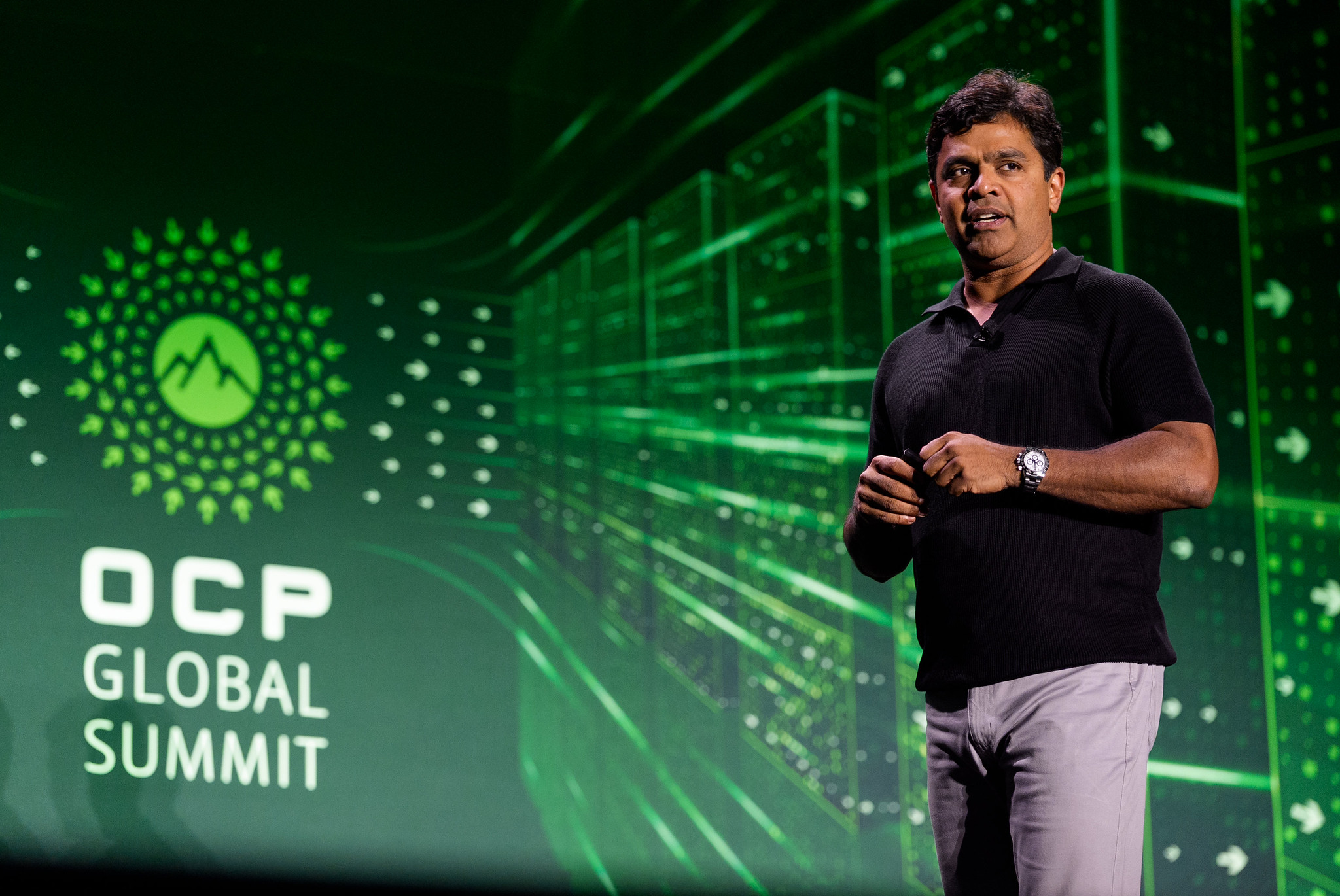
Meta is betting that open, Ethernet-based networking can wire together gigawatt-scale AI clusters, and it is giving away pieces of the stack to make that bet stick.
Why it matters
At the 2026 Open Compute Project Global Summit, Meta laid out the networking behind its latest AI models, including Muse Wonder and Muse Spark, and its gigawatt-scale Prometheus cluster. The headline is not one product. It is a strategy: build AI networks on open standards and open-source software rather than proprietary fabrics.
Meta is open-sourcing MetaRoCE, its RDMA transport for AI networks, starting with a user-space implementation on GitHub and a DPDK-based version coming. It also co-leads a new OCP effort with Microsoft and Alibaba, called OSPA, to standardize the switch platform layer, with a 1.0 spec submitted. As AI training stretches across buildings and regions, who controls the network increasingly shapes who can build at the frontier.
From the desk
We think this is quietly important. Most AI coverage fixates on chips and models, but Meta's own framing is that AI progress now depends on the network as much as on compute. When training jobs span hundreds of thousands of accelerators, the slowest link sets the pace. Meta is showing its work on that problem in public, with talks and slide decks available to everyone, and that openness helps the wider industry, not just Meta.
The specifics point in a consistent direction. IceCube is a 102.4T liquid-cooled switch with Broadcom Tomahawk 6C and NVIDIA Spectrum-6 variants. Its Flattened Planar Fabric connects each GPU to eight network planes and collapses a three-tier design to two. A petabit-scale super-spine called BAG joins buildings, campuses and regions in Prometheus. Tahan brings Ethernet to scale-up for its MTIA 300 accelerators, and the ESUN spec for Ethernet scale-up is moving from 1.0 to 1.1. Open standards across every layer, with multiple silicon vendors in the mix.
That multi-vendor approach is the strategic point. Standardizing the switch platform layer and open-sourcing transport reduces dependence on any single supplier, and Meta's OSPA talk says the current fragmentation adds months of duplicated bring-up work per platform. Cheaper, more interchangeable networking could lower the barrier for other operators building serious AI infrastructure.
The downside is scale itself. Gigawatt clusters linked across regions are an enormous commitment of power and capital, and open standards make that build-out easier to replicate. That raises questions about energy, local grids and concentration that a networking talk is not designed to answer. Meta's own test-methodology talk also notes that thousands of copper connections per rack mean roughly 10 bad links even at 99.9% yield, a reminder of how fragile these systems get as they grow.
Our read: open infrastructure is the healthier path for AI, and Meta deserves credit for pushing it. I'm watching whether competitors actually adopt OSPA and MetaRoCE, or whether open specs stay mostly Meta's own playbook.
Context
The Open Compute Project is an industry group for sharing data center hardware designs. Meta's switches run FBOSS, its network operating system, and partners at the summit included NVIDIA, Broadcom, Cisco, Microsoft, Alibaba, AMD and Keysight. Meta also uses SRv6 for a new backbone layer on FBOSS and SAI.
Who feels it
- Infrastructure engineers
- Open-source MetaRoCE, the OSPA spec and published talks give teams concrete reference designs for large AI fabrics.
- Network and chip vendors
- Multi-vendor switch designs and Ethernet for scale-up pressure proprietary interconnects and reward vendors who support open specs.
- Cloud providers
- Meta says its Flattened Planar Fabric was built with NVIDIA and shared with cloud partners, which could spread the design beyond Meta.
- Communities near data centers
- Gigawatt-scale clusters spanning regions imply large, sustained power demand.
What to watch
- OCP adoption of the OSPA 1.0 spec by vendors beyond the co-leads
- Release of the DPDK-based MetaRoCE implementation
- The ESUN 1.1 specification
- Whether other hyperscalers publish comparable scale-across designs