AI · Oct 2, 2026
NVIDIA DGX Spark 64GB Gives Developers More Ways to Build and Scale Local AINVIDIA Announces DGX Spark 64GB: A 1-PetaFLOP Grace Blackwell Desktop for Local AI Agents, Fine-Tuning, and Inference
Oct 2, 2026, 11:04 AM · MarkTechPost
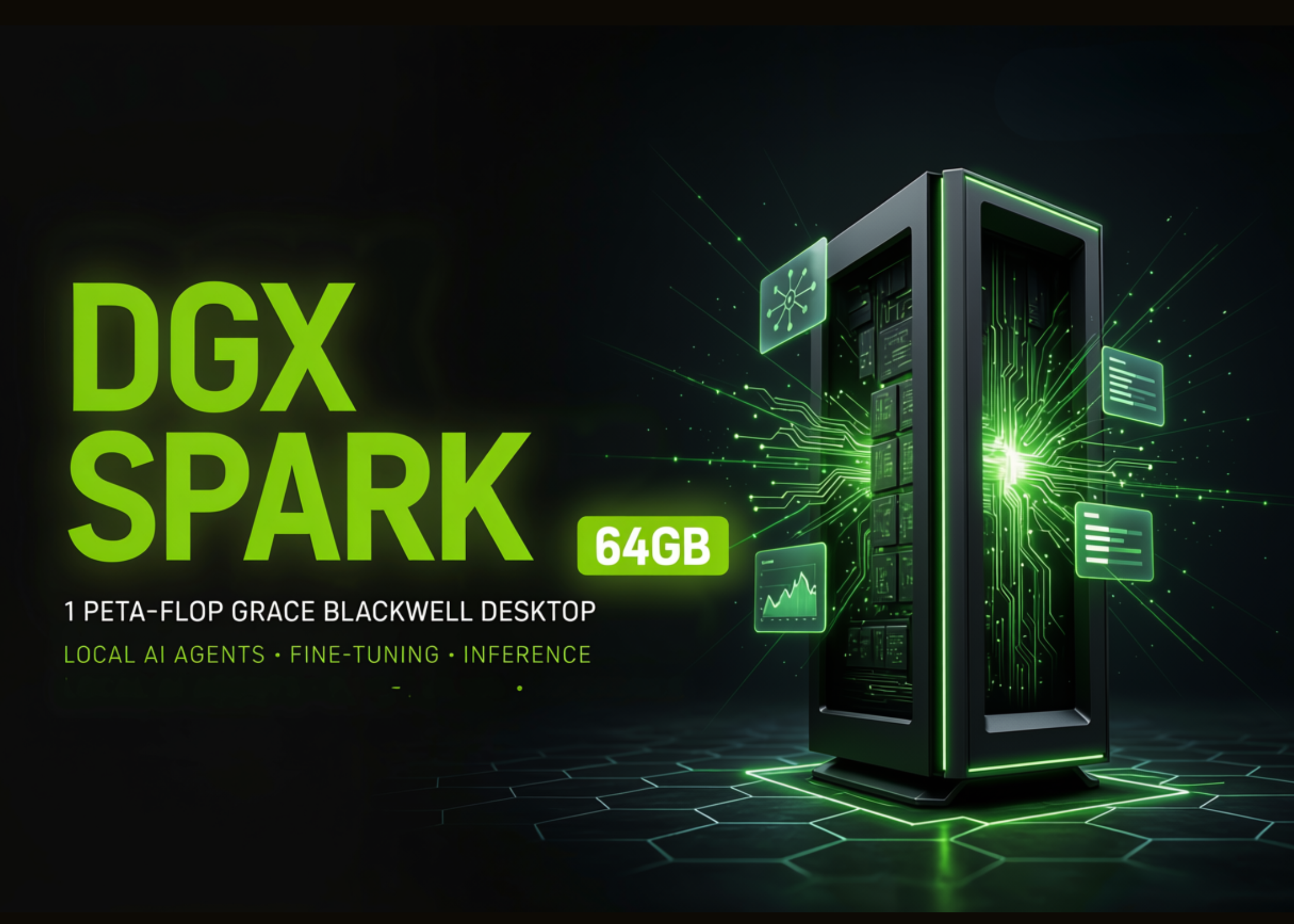
NVIDIA’s DGX Spark adds a 64GB Grace Blackwell desktop — 1 petaFLOP FP4, clusterable to 128GB — aimed at local agents that would otherwise burn metered API tokens all day.
Why it matters
Jean-marc Mommessin at MarkTechPost reports NVIDIA announced a 64GB DGX Spark configuration from Acer, ASUS, Dell, Gigabyte, HP and MSI. Same GB10 Grace Blackwell superchip as the original — up to 1 petaFLOP FP4 with sparsity, 20-core Grace Arm CPU, ConnectX-7 — but 64GB unified LPDDR5x instead of 128GB. Availability: October 23, 2026 via NVIDIA Marketplace, OEMs and retail.
NVIDIA positions 64GB as enough for capable 30–35B-class open models; two units cluster to 128GB memory and more compute. The piece cites token consumption up 14x since early 2026 as agents burn tool calls, retries and long context — costs that vanish on owned hardware. Software on first boot includes DGX OS, PyTorch, Jupyter, Ollama, plus NemoClaw, OpenShell guardrails and Nemotron optimizations. Wall-outlet power, 1.2 kg, no server room.
From the desk
We’re for putting serious inference on a desk. Always-on agents on metered APIs turn “helpful” into a line item. A Grace Blackwell mini that runs quantized Muse Glimmer, Nemotron 3.5 Lightning or Qwen3.8-27B locally — then clusters when you outgrow one box — is the hardware answer to that bill.
Useful AI should be runnable near the data and the human. Unified CPU/GPU memory over NVLink-C2C matters for agents that keep several models, KV caches and tool processes alive. Shipping Ollama and policy guardrails on day one is how you make that real for developers who aren’t cluster admins.
The downside if desktop AI factories proliferate is energy, noise and a new class of always-on local agents with file and network reach — privacy wins versus cloud, security responsibility shifts to the owner. 64GB also isn’t magic: full BF16 Glimmer needs 55GB+ and leaves almost nothing for context; quantized builds are the practical path. DeepSeek V4 Flash still wants multiple boxes in NVIDIA’s own framing.
I’m watching street pricing from OEM partners, real agent workloads on one 64GB unit versus the 128GB SKU, and whether clustering stays a one-click story or a weekend project.
Context
MarkTechPost lists example local models: Meta’s Muse Glimmer (~17GB quantized), NVIDIA Nemotron 3.5 Lightning (NVFP4), and Qwen3.8-27B (~13.5GB at 4-bit), with KV and runtime overhead on top.
Who feels it
- Developers & indie labs
- A lower-memory Spark SKU to run local agents without per-token cloud bills — if OEM pricing cooperates.
- Cloud API providers
- More incentive for power users to move steady agent traffic onto owned Blackwell desktops.
- OEM PC makers
- Another AI desktop SKU race across Acer, ASUS, Dell, Gigabyte, HP and MSI.
What to watch
- OEM street prices at the October 23 availability date
- Sustained local-agent demos on one 64GB box vs needing a cluster
- Adoption of NemoClaw/OpenShell defaults versus users stripping guardrails
Companies: NVIDIA