AI · Sep 30, 2026
The four rules in the White House AI commitment, and the missing fifth: penaltiesAt $299.99, the Shield TV Pro now makes sense mainly for Plex and codec enthusiasts
· Updated · Signal Desk newsroom
Analysis of reporting by Ars Technica. How we work
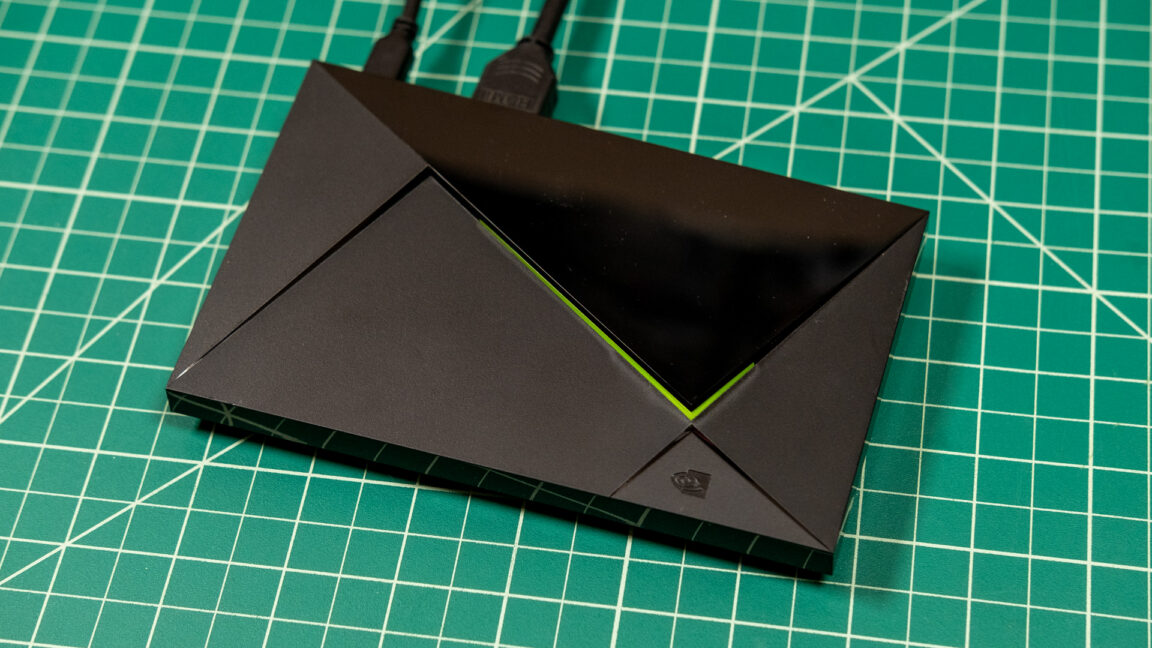
Ars Technica reports Nvidia’s 2019 Shield TV Pro rose $100 to $299.99 on October 2, with Nvidia citing industry-wide component costs including memory. The box still stands out for codec breadth, AI upscaling and Plex serving, but is a poor deal for streaming-only buyers.
Key takeaways
- Shield TV Pro rose to $299.99 from October 2; it launched at $199.99 in 2019.
- The $149.99 non-Pro model is discontinued.
- Nvidia blamed component costs, “including memory,” tied to the AI supply squeeze.
- There is no pre-AI parts stockpile; stock has been slim for months.
- Best Buy sells it at the new price; Nvidia’s store was out of stock at publication.
The change
Ars Technica reports Nvidia raised the Shield TV Pro to $299.99 effective October 2, a $100 increase on a streaming box that debuted in 2019 at $199.99. The non-Pro model, which was $149.99, is discontinued. A Nvidia spokesperson blamed industry-wide component costs, “including memory,” driven by the generative AI supply squeeze. WIRED republished the report with additional framing (WIRED’s version).
Nvidia still manufactures and sells every Shield it makes, with no stockpile of parts bought before the AI boom, and stock has been slim for months. Best Buy carries it at the new price, while Nvidia’s own store was out of stock when Ars published.
Who should still buy it
Shield remains notable for its codec breadth, AI upscaling and strength as a Plex server on aging Tegra X1+ silicon, which has kept it a favorite among power users. At $300, though, it is a worse deal for anyone who mainly streams services like Netflix, since cheaper streamers cover that use. The price effectively narrows Shield to enthusiasts who need its specific capabilities.
Nvidia’s Andrew Bell previously described Shield to Ars as a passion project. The higher price lets Nvidia keep building units against today’s memory market, at the cost of making the niche smaller.
A wider hardware tax
The story illustrates how memory and storage demand from AI data centers reaches every product that still needs DRAM and NAND, including phones, PCs and set-top boxes. Nvidia is both a cause and a casualty of the crunch, given its role in AI accelerators and high-bandwidth memory (NVLink Fusion). Ars notes consoles from Nintendo, Microsoft and Sony have also taken mid-cycle increases, citing the PS5 Pro moving from $699.99 at its 2024 launch to $899.99.
Enthusiasts who wanted a reliable media appliance effectively absorb some of the cost of data-center demand they never chose. Whether “AI tax” pricing becomes a standard explanation for raising prices on aging products, and whether memory costs cool enough to reverse course, are the questions ahead. More in our Nvidia coverage, business coverage and AI coverage.
Who feels it
- Shield buyers
- Worth $300 mainly for codec and Plex needs.
- Consumer hardware makers
- Mid-life price hikes on memory-heavy products until supply normalizes.
- AI infrastructure watchers
- Data-center demand showing up in living-room products.
What to watch
- Whether Shield stock stabilizes at $299.99.
- Similar hikes on other aging streaming boxes.
- Memory price trends for consumer electronics.
FAQ
What does the Shield TV Pro cost now?
$299.99, up $100, from October 2.
Why?
Nvidia cited higher industry-wide component costs, including memory.
Is it still worth buying?
Mainly for users who need its codec support, AI upscaling or Plex server capabilities.
Where is it sold?
Best Buy at the new price; Nvidia’s store was out of stock at publication.
Companies: NVIDIA
More on NVIDIA
AI · Oct 7, 2026
Microsoft prices its first RTX Spark PCs; the agent sandbox coming to all Windows 11 users may matter moreAI · Sep 24, 2026
Nvidia, DeepMind and EMBL-EBI release predicted structures for protein complexes from 2,800-plus virusesAI · Oct 21, 2026
Europe’s banks are training their own AI on open weights, with Nvidia underneathAI · Oct 21, 2026
Nvidia turns Cosmos into a synthetic-data factory for robots’ rarest, riskiest moments