Into the Omniverse: How Developers Turn Ideas Into Simulations With Frontier AI Agents
Oct 8, 2026, 2:06 PM · NVIDIA Blog
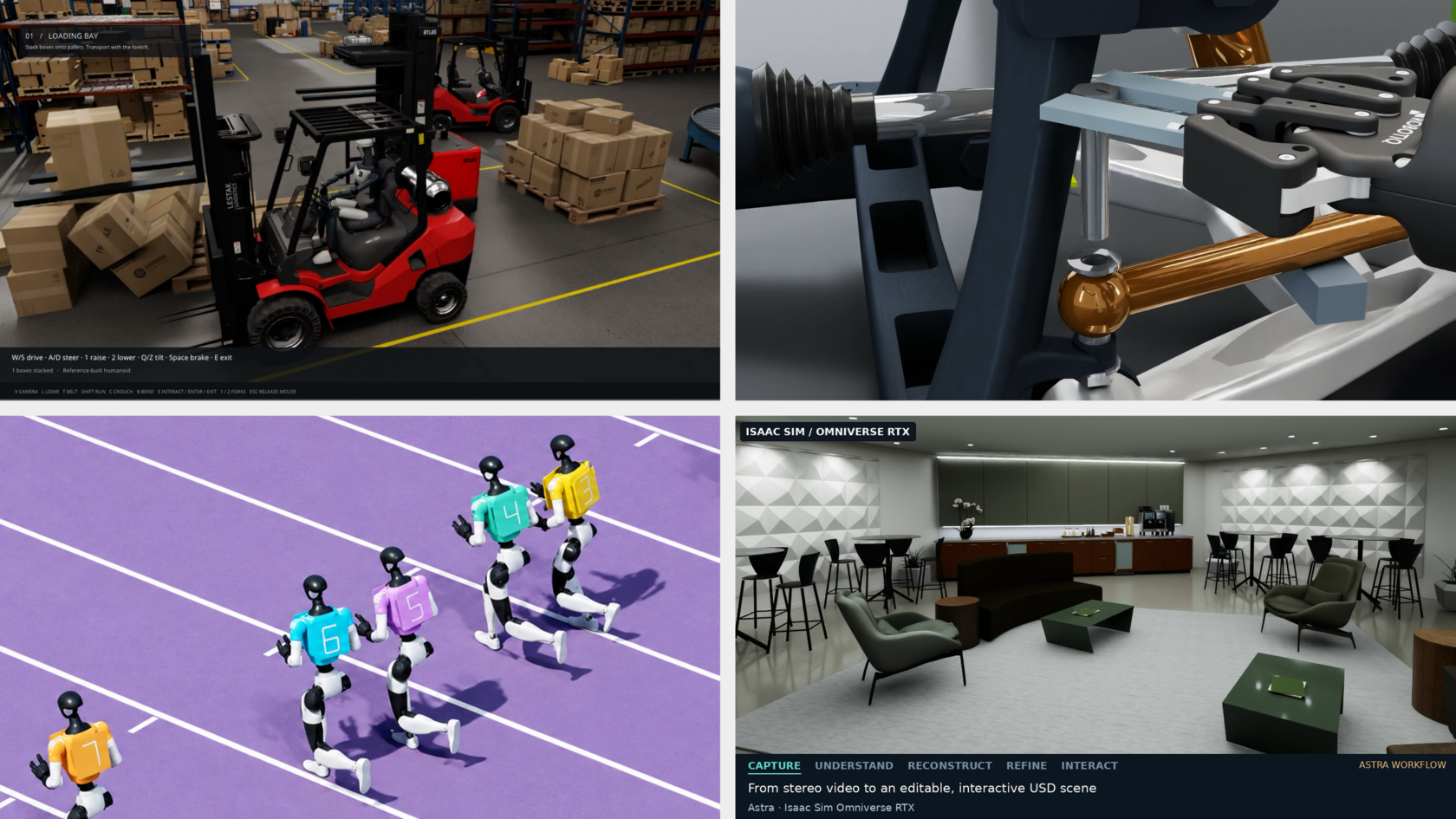
NVIDIA's showcase of agents building robot and driving simulators is genuinely useful, but every example comes from its own staff, and simulation is only as honest as the gap to reality.
Why it matters
NVIDIA published a set of projects in which its engineers direct frontier models, mostly OpenAI's GPT-6 Astra and in one case alongside Claude Fable 5 agents, to assemble simulation apps on top of Omniverse libraries for physics, rendering, sensors and streaming. The examples range from a humanoid warehouse simulator and a San Francisco driving testbed to a robot disassembling a car suspension and an International Space Station model in the browser.
The shift is in who does the plumbing. Connecting assets, physics and rendering has been slow, specialist work. If agents can wire it up from natural-language direction while a person reviews and corrects, more teams can test robots and vehicles in simulation before they touch hardware.
From the desk
We like the strongest example here because it is about measurement, not spectacle. An NVIDIA sensor-validation engineer guided agents for about three days to compare simulated camera and LiDAR output against recorded data, then create or fix digital twins until the metrics passed. That is the right shape for agent work: a clear target, a numeric acceptance test, and a human deciding when it is good enough.
The Robo Olympics test is a useful reality check in the other direction. A simulated Unitree G1 humanoid cleared a single hurdle in 64 of 100 trials. NVIDIA presents that as feedback for improving timing and control, which is fair. It is also a reminder that agent-built controllers still fail a lot, even in a clean virtual world.
The caution we want on the record: this is a vendor showcase. Every project is from NVIDIA staff, using NVIDIA libraries, framed by NVIDIA. There are no outside teams, no time or cost comparisons with doing it by hand, and no failure rates for the agents themselves. And simulation carries its own risk as it scales. If agents make it cheap to build convincing virtual worlds, the temptation is to trust them more than the sim-to-real gap deserves, especially for robotaxis and humanoids working near people.
I'm watching for the moment outside developers publish the same kind of workflow with honest numbers on what broke. Until then, this reads as a credible direction and a strong sales pitch at the same time.
Context
Omniverse is NVIDIA's platform for OpenUSD-based 3D simulation. The libraries named in the post include ovphysx for physics, ovstage for scene updates, ovrtx for rendering and ovstream for streaming, along with Isaac Sim, the Newton physics engine, the open-source Warp framework and Cosmos models for varying conditions like weather and lighting.
Who feels it
- Robotics and AV developers
- Agent-assisted scene building could shorten the setup time for simulation testing, provided teams keep validating against real sensor data.
- Simulation engineers
- The role tilts toward directing, reviewing and defining acceptance metrics rather than hand-wiring every integration.
- Safety reviewers
- Faster simulation is good for testing, but easier-to-build virtual worlds raise the bar for proving they match reality.
What to watch
- Examples from developers outside NVIDIA, which the post says are coming
- Published data on how often agent-built simulations needed human correction
- Whether sim-to-real validation metrics become a standard part of these workflows
- Adoption of the Omniverse agent skills referenced in the post
Companies: NVIDIA