Nvidia's big bet on physical AI aims for safer robotaxis, humanoid robots
Oct 8, 2026, 4:15 AM · Ars Technica
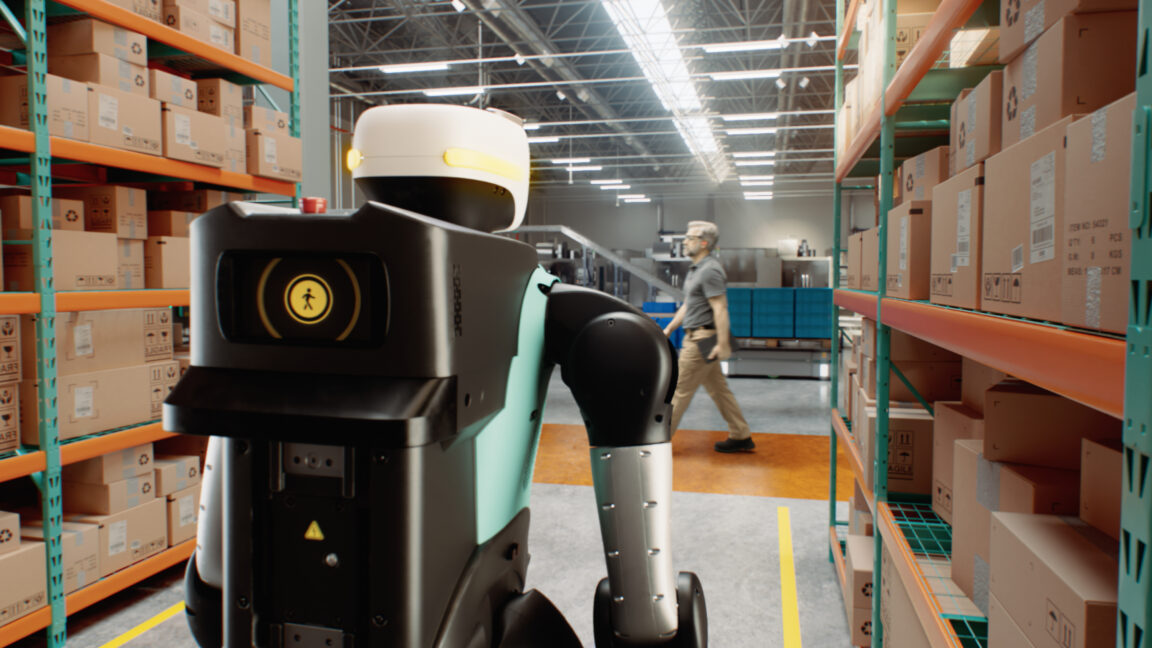
Nvidia wants to sell the safety layer for robots working beside people. That could speed up careful deployments, and it could also make one company the default arbiter of what safe means.
Why it matters
Ars Technica details Nvidia's Halos, a full-stack safety system that launched in 2025 for self-driving vehicles and expanded in June 2026 to robotics, covering warehouse robots, factory humanoids and even surgical robots. It pairs hardware, such as the IGX Thor module with an independent processor for safety workloads, with an operating system that monitors hardware and software for failures, a sensor bridge that flags corrupted data, simulation tools and an inspection lab program.
The stakes are physical. Agility Robotics' Digit 5 humanoid is the first to build Halos in, which let Agility move safety sensors onto the robot itself instead of relying on external sensors around a fenced work cell. Boston Dynamics, KION Group and LG are also named as partners or adopters.
From the desk
We think safety is the right bottleneck to attack, and Nvidia's own robotics lead says as much: models and hardware are getting capable, and safety is what holds deployment back. A robot that carries its own safety system can work in more places without new infrastructure for every task. Done well, that means fewer fences and fewer people hurt by machines that cannot see around a corner.
The hard part, which Nvidia admits, is that safety in robotics does not have one definition. Functional safety for cars is fairly consistent across automakers and countries. A vacuum in a hallway and a forklift on a loading dock are not the same problem. Nvidia's answer is a programmable platform that lets developers define custom safety functions, while acknowledging that flexibility can mean less control over the stack. That tension is the story. Custom rules are necessary, and they also mean each deployment is only as safe as the choices its developer made.
The business context matters here too. Jensen Huang has said physical AI is already driving nearly $10 billion in annual revenue, and Nvidia has invested directly in robot makers including Agility and Figure AI. When the supplier of the chips, the simulation, the safety stack and the accreditation program is also an investor in the companies being accredited, independence becomes a fair question. We are not alleging a problem; we are saying regulators and buyers should want third-party standards and testing, not a single vendor's stamp.
Where this leads if it scales: humanoids and mobile robots moving through factories, warehouses and hospitals alongside workers, with Nvidia's architecture underneath many of them. That could be good for consistency. It also concentrates risk, because a flaw in a shared safety layer is a flaw everywhere at once.
Our read: this is serious engineering aimed at a real problem, and the move to put safety on the robot itself is a step forward. I'm watching for incident data from real deployments, because that, not partner lists, is how we will know whether it works.
Context
Nvidia CEO Jensen Huang began highlighting physical AI as the company's second-most important growth category in 2025. Ars notes Boston Dynamics' Atlas humanoids could start deploying in parent company Hyundai's automotive factories by 2028, and that it remains to be seen whether humanoids become general-purpose workers.
Who feels it
- Warehouse and factory workers
- Robots designed to work near people without barriers could be safer than today's caged setups, but only if safety functions are well defined and tested.
- Robotics companies
- An off-the-shelf safety stack could shorten development, at the cost of deeper dependence on one supplier.
- Regulators and standards bodies
- Varying definitions of robot safety make independent standards and testing more important as deployments grow.
What to watch
- Real-world safety and incident data from Digit 5 and other Halos deployments
- Whether independent bodies certify Halos-based robots or adopt its methods
- More robot makers joining the Halos accreditation program
- Progress on Atlas deployments in Hyundai factories
Companies: NVIDIA